Showing posts with label Ferry. Show all posts

Saturday, February 14, 2015

Scotland: Kilmartin Glen, Mull, & Iona

Dates Traveled: 27-29 December 2014

Christmas was once again spent away from family this year, but this year would at least be exciting. One of my friends and I decided to head west from Glasgow to Oban with some stops along the way. When I moved back to Glasgow from Australia a year ago, a friend of one of my friends was looking at a wall map of the British Isles in my flat, pointed to an area south of Oban, and said, "You must go here, to Kilmartin Glen." He said that Kilmartin Glen is one of the most overlooked destinations for anyone interested in Scottish history and neolithic sites. So, after a day of recovering form boxing day laziness, we headed out from Glasgow.
Along the A83
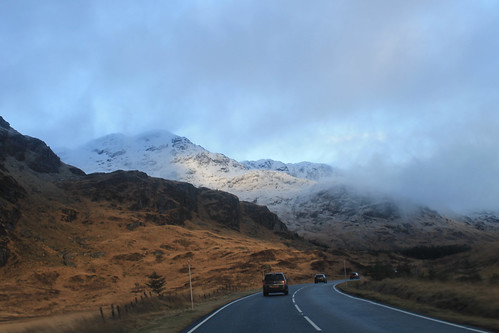
Driving along the A83 between Loch Lomond and Inverary
Winter is an absolutely beautiful time to visit Scotland. Sure, the days are incredibly short, but the snow on the hills makes it unlike anywhere else. Once away from the main cities, the roads get narrow and windy, which makes for getting anywhere quickly quite tricky! It took us a while to get out to Kilmartin Glen, via a coffee stop in Inverary, but a little after noon we pulled into our first stop, Dunadd, which was the first site of the first kings of Scotland, having been in use since the Iron Age. On the little hill above the glen is a rock with some footprints carved into them, possibly where the kings looked out - I imagine much like Mufasa and Simba from Pride Rock :)

A little bit further down the road are a series of standing stones dating back 5,000 years. We missed the winter solstice only by a few days, but it's pretty amazing how these stones would have lined up with the setting sun, even after 5,000 years! I'm often really amazed by how after thousands of years, and with all of our modern technology and knowledge, we still have no real idea what these stones or circles were used for! And while not as grand as the Ring of Brodgar in Orkney or as circular as the Drombeg Stone Circle in southwest Ireland, the stones are just as enigmatic, and there are a lot of them, including one site where five stones make an X figure in a field, apparently a very unusual arrangement. Starving, we stopped in at the Kilmartin Hotel and had a tasty pub supper before exploring the curchyard across the street with brilliant scenery looking down the Glen.

There were still a few things we wanted to see before it got dark and before we got to Oban, and even though it was only 3 o'clock in the afternoon, we were running short on daylight, so we hit the road again, winding around the coast, to the Bridge over the Atlantic. To be fair, this is a very nice looking stone bridge, arching high over a small tidal waterway, technically part of the Atlantic Ocean, separating the Scottish mainland from the small Isle of Seil. Apparently nowhere else (maybe in Scotland) is there a bridge over the Atlantic, so it is only here you can say you've "driven across the Atlantic Ocean." Not really much to see, we kept on to the small town on Seil of Ellenabeich, an old slate mining town that now consists of three rows of whitewash cottages. A beautifully small town that I would have liked to have stayed in a bit longer. Would have been a great place to write up my PhD thesis! While in Ellenabeich, the sun went down and we didn't want to be stuck on unlit country roads for too long, so we headed in to Oban, checked into our hotel, and met up with one of my Uni friends who was home visiting family for the holidays.

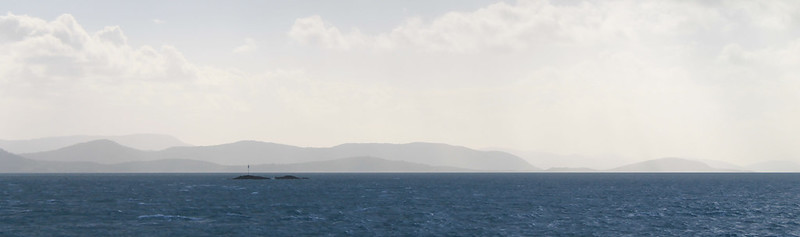
Mull Panorama
Snow-capped mountains on the Isle of Mull with Duart Castle in the foreground from the ferry from Oban to Mull.

We got up early the next morning, a brilliantly clear but chilly morning, to catch the ferry from Oban out to the Isle of Mull, a rugged island about an hour offshore from Oban. The views from the ferry back to the mainland of snow capped mountains were amazing, not to mention the snow capped peaks of Ben More, the only Munro on Mull. A little note for visiting Mull in the winter: Don't plan on relying on public transportation, especially on a Sunday! We were lucky to have a Range Rover, so the small single-track roads and ruts of Mull were a piece of cake, but be careful if you have a smaller car not to go off the edge of the road or you will get stuck! We headed immediately out to the westernmost point of Mull, a town called, Fionnphort, where we waited for the quick ferry out to the small Isle of Iona. Again, visiting in the winter and on a Sunday, you run the risk of either the ferry not running, or only making one trip out to Iona, but not back, so it's suggested you call the portmaster on Mull the day before to make sure the ferries are running!
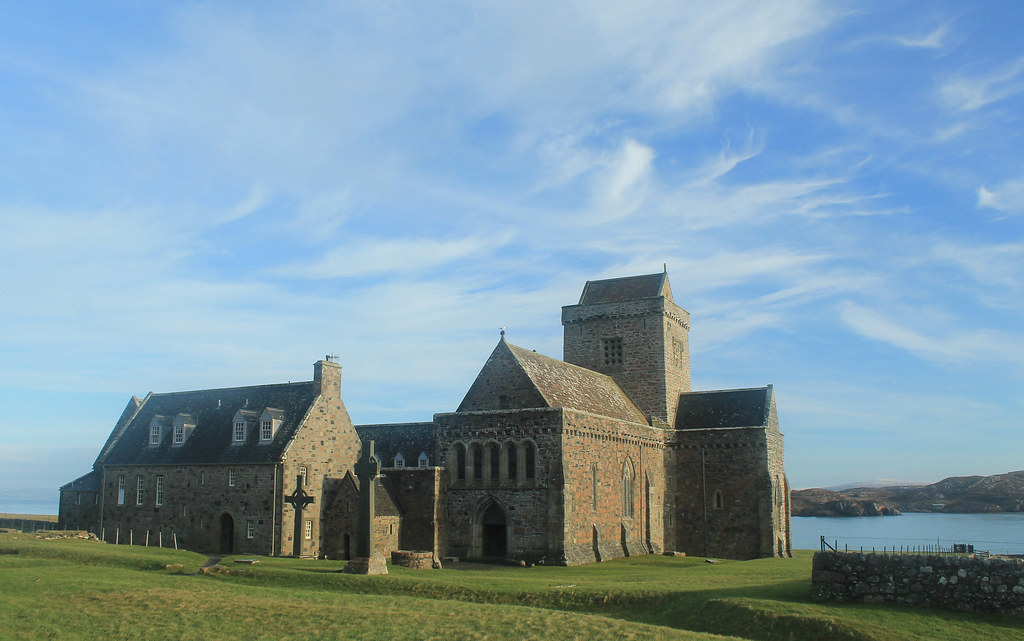
Iona Abbey
Iona Abbey
The sky was crystal clear, and though it wasn't windy, it was really cold! But while waiting for the ferry we did get to see a small fishing boat loading up for the day, and it must be quite a regular occasion because there was a seal who sidled right up to the boat begging for a bit of breakfast! The ferry finally arrived and we walked on, making sure to ensure it would come back from Iona! Now, Iona is a beautiful little island and I wish we had more time to spend there, but with the two hours we did, we made sure to walk over to the famed Iona Abbey, the former Catholic monastery where the Book of Kells was written. The Abbey survived Viking raids as well as the Protestant Reformation, and is now part of the Church of Scotland. So many tourists come out to Iona in the summer, it was nice to experience the island in winter when even the hostels were closed for the season! BUT, if you go on the weekend, you don't have to pay to get in to the grounds! We took a little walk up to the highest point on Iona, Dun I, for some breathtaking views to Mull and so many other Inner Hebridean islands.

Running short on time, we headed back to the ferry and crossed back over to Fionnphort, accompanied by dolphins jumping out of the water and playing in the wake of the ferry! Back in the car, we decided to take the small winding road around the rest of Mull. Now, I thought the road from the Mull ferry to Fionnphort was small, but it was nothing compared to the B8035, which was tucked right along the coast with rocky cliffs on one side, but provided amazing scenery, especially during sunset on such a clear day! The B8035 turns onto the B8073 and the road climbs up some very steep hills that any small car would have some trouble getting up! If you're in a small car, you definitely want to take the B8073 counterclockwise from Tobermory where it will be easier to go down these roads than up. Daylight was nearly gone as we arrived to Calgary Beach in the small locality of Calgary, the same that the Canadian metropolis is named after! But we couldn't stay long since the sun had now set and we still had about 30 minutes to drive to Tobermory for a quick fish dinner (not many places open on a winter Sunday), very quick because we had to get back down to the ferry docks to catch the last ferry back to the mainland.
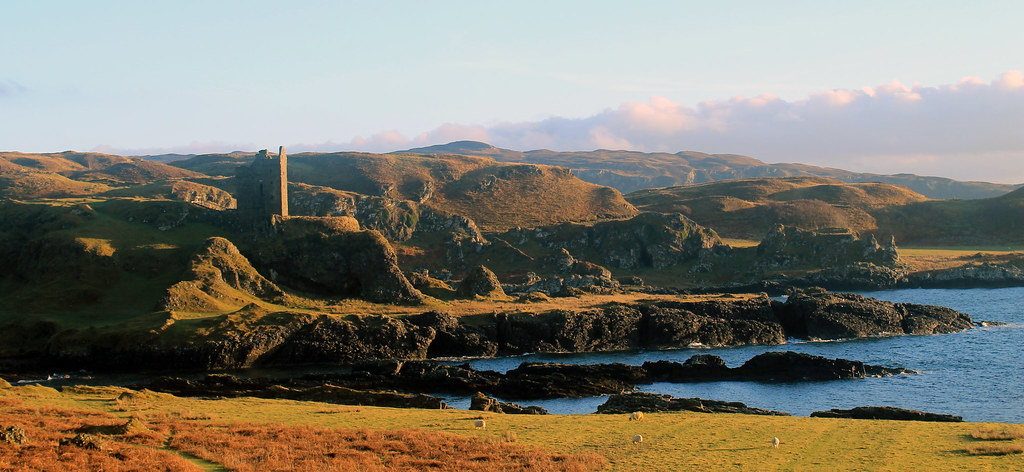
Gylen Castle and Kerrera Coast
Gylen Castle on the southern end of Kerrera
The following morning was yet again a clear day on the western Scottish coast, though much colder! Not wanting to waste time, we grabbed some breakfast and went to the small local ferry from Oban out to the small island, Kerrera. A privately-owned ferry, you signal the owner that you want a ride by sliding a big panel open on the mainland, revealing a big black square, and upon seeing it, the ferryman comes over to pick you up for the 5 minute crossing. We decided to do the 3.5 hour loop down to Gylen Castle at the southern end of the Island and back. Though not a strenuous walk, it felt long because it was so cold, especially in the shade, but the destination was amazing - a square castle with a small footprint exposed on a tall rocky knob over the coast. The castle was besieged and burned in 1647, though recently the Clan MacDougall began restorations. It's surely not much of a castle, but its position in the grassy hills along the coast sure makes it a great place that we had to ourselves! The rest of the circuit along the west side of the island isn't as scenic, and was a bit mushy underfoot, but there were a few brilliant moments in the setting sunlight over to Mull. Back in time for the ferry back to the mainland, we hopped back into the car and headed back up to Oban to pick up my friend who was coming with us back to Glasgow, and with that we were off back home.

Though I think we lucked out, weather-wise, the weekend was a great and most welcome break from city life in Glasgow, and so easy for a few days! Enjoy the photos:

Sunday, April 6, 2014

Australia: Whitsunday Islands in a Weekend

Trip Date: 06-08 September 2013


A few months ago, back in early September, I took off early and flew from Sydney to Hamilton Island, one of the entry airports to the Whitsunday Islands on the central Queensland Coast. I’d heard about the Whitsundays from a couple of friends who’d been there before and the more I looked into it, the more these pristine islands, world-famous for their sailing cruises, appealed to me.

Whitsunday Islands
The beautifully hazy Whitsunday Islands

If you’re traveling on a budget and have the time, you might consider flying in to Mackay a few hours to the south. But if you sign up for discount airlines’ emails, you can get affordable tickets right into either Proserpine airport at Airlie Beach (on the mainland) or into Hamilton Island airport on, well, Hamilton Island. When I booked my tickets Hamilton Island was my best entry point and it was still cheaper and more convenient to buy a round-trip ferry ticket to Airlie Beach on the mainland than it is to fly into Mackay and find your way up to Airlie Beach. Alternatively, if you have a good couple of hundred of dollars in your pocket, which I as a student do not, you can just stay out on Hamilton Island in one of their very swanky accommodations.

I got in on a Friday afternoon while the flight was smooth most of the way up, the winds coming in off the Pacific made for a very bumpy and tipsy landing – one of the worst I’ve experienced in a while! With that said, the views coming in to Hamilton Island are stunning. Beautiful blue water, dozens of lush green islands, and stunningly white sandy beaches. It makes landing on a short island runway all worth it!

The weather wasn’t all that great and I began preparing myself for a less-than-relaxing sunny beach weekend than I expected. While waiting for the ferry to take us to the mainland, the clouds came in dark and ominous and at times spitted a bit of rain. Back in February of 2013, a massive storm struck the islands causing widespread damage that was still visible in September as some boats were still washed up onto breakwaters, shoals, and jetties – but of course none of the tourism ads show that but rather want you to think it is always sunny here (something the girls in the row in front of me on the plane clearly had in mind). It all just depends on what you get and you should just prepare yourself to have fun no matter what.

And that was my plan. I’d booked a bed at the YHA in Airlie Beach and planned on doing some beach-visiting, snorkeling, and bushwalking while I was here over the next day and a half. Like all other YHA hostels I’ve stayed at, the one in Airlie was fine for accommodation, though maybe a bit more utilitarian. It was quiet when you wanted it to be and comfortable, though, so I had no problems with it. It is a backpackers’ accommodation though, and one thing you can’t get away from is the constant pressure to socialise with anyone else who happens to be staying in your room. I’d booked a bed in a dorm and there was a nice guy from Sweden in there who immediately started chatting me up. I was fine with that for a few minutes, but the incessant need for him to keep asking me questions about where I was from, why I was in Airlie Beach, and what I was going to do there started driving me crazy. After a series of me giving him one word responses, I decided I needed a sign that reads, “The only reason I’m staying here is because it’s cheap,” especially if I keep staying at hostels rather than the more expensive beach-side resorts.

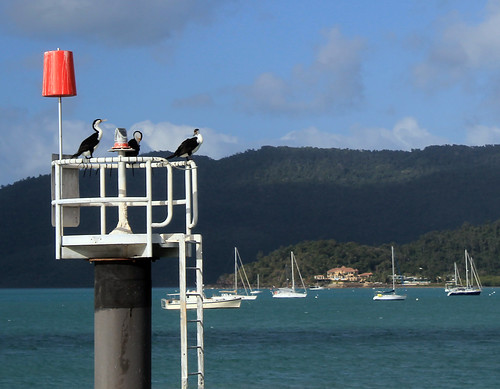
Cormorant Welcome
The cormorant welcoming committee in Airlie Beach
I really wasn’t trying to be antisocial, but I had already decided on the flight in that this was going to be a nice me-weekend. Unfortunately, Airlie Beach is just not a place for that as backpackers are literally everywhere and the atmosphere in nearly all of the local pubs and bars plays testament to the party scene Airlie is so well known for.

I decided on a pub for a burger desert – it doesn’t really matter which pub; they’re all crap and went back to the hostel to test out my new LifeProof waterproof iPhone case. Initially, I’d wanted to invest in a GoPro camera for all of the snorkeling I was going to be doing over the next few months, but they’re not cheap and instead I decided an iPhone case was the next best thing. Customer reviews did nothing but rave about LifeProof cases and for $70, I figured I’d take the risk and after unpackaging the case in the hostel and submerging it in a rubbish bin full of water (without the phone in it, of course) for half an hour, the inside proved to be perfectly dry. I was happy with it enough to give it a go out on the reefs.

Early the next morning, me and a few other backpackers (I hate using that term for myself, but it’s just easier) were picked up from the YHA by Ocean Rafting, a company I found through Trip Advisor which is eco-certified and boasts their pro-environmentalism vehemently on their website. Considering the Earth is continuously warming and ocean acidification an ever increasing problem, I figured it would be responsible of me to go out to the islands and reefs with a company that so clearly cares about the environment they take tourists to. Ocean Rafting also was appealing because their boats only take ~25 people on them so you get a much more personalised and intimate tour of the Whitsundays. Finally, Ocean Rafting has a sister company in Cape Tribulation (Ocean Safari) and you can get a small discount if you book a combo trip with both companies and since I’d be going up to Cape Tribulation in October when my family visited, I figured I might as well save a few bucks!

We were some of the first ones out to the dock where our boat, Thunderstruck, was moored and it took a while for everyone else on our tour to show up, but soon we were all squeezed into our wetsuits – a new experience for me – and stepping on to Thunderstruck which was an open-topped speedboat with large pontoons on either side. We could either sit on the benches or on the pontoons and our van-driver that morning said today was a perfect day to ride up front or on the pontoons since the swell coming in off the ocean was still pretty big and the boat was designed for wavy conditions. I had no intention of missing out on any bit of adventure, so I rocked on up to the front row of benches with a truly Irish couple – the guy had a penchant for saying, “Fuck” and “Shit” every other word – which got to be a bit much by the end of the day, but they were good company.

The sun was not out in full brightness yet, but I could tell that the rough weather experienced on my arrival the night before was clearing up and by the time we picked another few people up from Daydream Island and passed through the Molle Islands, the clouds had disappeared and it was obviously going to be a great day! There are dozens of islands in the Whitsundays and when big ocean swells hit them, the waves are refracted around the islands, funneled between narrow passages, and come at you from every which way, which made our boat ride out to the channel between Hook and Whitsunday Islands incredibly bouncy and fun! People were screaming as the prow of the boat lifted up over a wave and came crashing down into the trough on the other side. Our morning driver was right – the choppier the water, the better the ride is on these boats!

We passed through the narrow channel between Hook and Whitsunday Islands and turned right to follow the shoreline of Whitsunday Island which rose up from the sea in steep, bare granite cliffs. It wasn’t before long and the boat slowed down on the opposite side of a skinny peninsula that separated us from the famous Whitehaven Inlet and beach. We hiked up to the ridgeline of this skinny peninsula barefoot and in our wetsuits through the subtropical heat and humidity to a vantage point from which you can see Whitehaven Beach in all of its pristine, white, sandy glory!

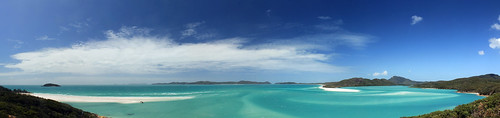
Whitsunday Islands National Park
Beautiful turquoise waters and white sand of Whitehaven Beach and Whitsunday Inlet.

To the local Aboriginal people, the Whitsunday Islands are sacred and focus heavily in their Dreamtime stories and of particular significance are the literally thousands of stingrays that call the estuary home. The estuary itself is not terribly long but it is quite wide and the stream flowing out to the ocean is clearly marked from the white sandy deposits by its bold, brilliant, turquoise colour. From the viewing platform, you see not only the stunning estuary, but you look down over bright white sand spits built by longshore currents transporting sand down from Whitehaven beach which stretches as far as you can see in front of you. Geologically, the sand on Whitehaven Beach has been transported hundreds of kilometers along the Australian coast and the purest quartz sand grains are eventually deposited along the beach as coastal currents eddy between the Islands. The fine silica sand is so pure that even on the hottest days it is quite cool to the touch because quartz just does not retain heat well. It is easy to see why the Whitsunday Islands are designated a UNESCO World Heritage Site.

We didn’t linger long at the viewing platform, abandoning it for lunch down on the white sand spit at the mouth of the estuary. The great thing about the tour with Ocean Rafting is that they are the only company allowed to anchor in the estuary itself. No other company is allowed to anchor here and no one is allowed to remove anything from the beach or any of the islands due in part to their listing as a World Heritage site, but also due to their sacred significance to the local Aboriginal people. Only one organization has legally been allowed to remove sand from the beach. Back when NASA was building the Hubble Telescope, they needed the purest silica in the world to melt and form the telescope’s lenses, as any impurity at all would ruin the telescope’s capabilities of photographing space’s wonders.

We spent about an hour on the white sand spit trying to keep our lunches from being stolen by seagulls. No one really talked and while I think it was because of the sun and hunger, I’d like to believe it was because everyone was in awe at this magnificent gem of natural beauty!

After lunch, our boat took us back north toward Hook Island and through what the captain and tour guide referred to as the Devil’s Washing Machine – an area of water where the swirling eddies converge together and the ocean’s wave double in height! Sitting on the side pontoon of the boat, with nothing to hold on to but a small canvas strap between my legs, this proved to be much bouncier of a ride than if I’d had a seat in the boat but it was amazingly fun feeling your body leave your seat as the boat falls back to the water after running off the crest of a wave!

Soon we arrived at the first of our two snorkeling sites on the east side of Hook Island. This was the first time I was going to have willingly jumped into the ocean since I went snorkeling in New Zealand’s Bay of Islands, which was the beginning of conquering my personal and very irrational fear of the ocean! I knew that putting myself in with a group of people who weren’t afraid to just jump in the ocean would pressure me into not being a chicken, but then while the captain was explaining what we’d be seeing at this site, his deckhand pulled a jar of fish food out and started throwing the little kernels of food into the water. As he did this schools of fish too many to count would swarm the water where the food landed – mostly schools of a blue-yellow fish (NOT SURE WHAT IT’S CALLED??).  But what worried me the most was the much larger Maori wrasse – massive fish that can grow to six feet in length with large beak-like mouths. Supposedly, Maori wrasse are harmless, but their size was intimidating enough for me to hold back on the boat much longer than everyone else, petrified to jump in in case one of these massive fish were to sneak up on me!

But money talks, and I reminded myself that I’d bought the waterproof iPhone case for this purpose and that I needed to put it to good use. I slipped on my flippers, tucked my camera into the sleeve of my wetsuit, donned my mask and snorkel and flopped off the side of the boat. I was in, and it was amazing! Whereas we saw heaps of sea urchins and seaweed amongst the rocks snorkeling in New Zealand, there was nothing but fish and coral here! Huge stacks of all of the coral you’ve seen in movies, books, and pictures and just as many types I’d never seen or heard of before! There were loads of fish – mostly the ones schooling around the food but also rainbow parrotfish, big fish, small fish, and yes, even the great Maori wrasse which I saw sneaking up on me from behind, though turned away before getting too close to me!

We were in the water for about an hour before being called back to the boat, which didn’t take me long as I didn’t dare venture too far away, but took some of the more intrepid explorers a wee bit longer. Because of the windy weather that hit the islands on the previous few days, sand had been stirred up all around the islands that made visibility low and the captain thought we might have better luck a few bays further around the island. We made the short trip to the next bay and spent another hour or so exploring the corals here. Indeed visibility was better and I was a bit more adventurous and tried seeing as much of the reef as I could. It was truly like being in an underwater wonder world and even I was amazed at how quickly my inhibitions melted away under the spell of the reef.

Hook Island Reef
Parrotfish on the reef!
I think everyone should be able to experience a tropical reef up close at some point in their life  - though the scientist in me cautions anyone who does to be very conscious about what company they use to get to the reefs. Climate change, warming ocean waters, and acidifying oceans are killing reefs all around the world. They are some of the most delicate and fragile ecosystems in the world yet are crucial for the survival and sustenance of all the oceans.

It was getting late and we boarded the boat one last time before finishing our circumnavigation of Hook Island, past the old resort of Hayman Island, and back toward Airlie Beach. The seas were still rough but I wasn’t upset I once more found myself riding the pontoon on the way back for one of the wettest rides on the boat!

There’s nothing to report from my second night in Airlie Beach because it’s a dive and not worth wasting words on.

I woke up early on my third day in the Whitsundays and walked back to the ferry docks to catch the first ferry back to Hamilton Island. My flight back to Sydney wasn’t until later in the afternoon, but I wanted to do a bit of bushwalking and it looked like there were some great trails on Hamilton Island. Indeed, once you get past all of the resort villas, bungalows, hotels, condos, and conference centres, you find a track that leads up to the rocky lookout called, Passage Peak.

It only took about an hour to reach the peak, though unless you’re an avid hiker, I’d plan on it taking more than that. The weather was hot, but the sky was perfectly clear for looking out over the islands from one of the highest points in the islands! Fluffy white clouds marched through the sky in endless precession, casting shadows on the clear turquoise water. I had a nice chat with some other bushwalkers at the top and they pointed out some pairs of whales they’d seen while I told them about Whitehaven Beach which you could see over the lush green slopes of neighboring Whitsunday Island. Though it was Sunday in Australia, it was a Michigan Game-Day Saturday back home, and in true fashion, I proudly wore my UM Jersey, which I also had to explain to the other hikers, but they generously took photos of me, saving me from yet more selfies. Eventually they left and thus left me to one of the most spectacular viewing points of natural beauty I’ve ever seen!

Wherever You Go, Go Blue!
Going Blue during a bushwalk to the summit of Passage Peak on
Hamilton Island. I believe we beat Indiana that day!
I had plenty of time to walk back to the airport, so I took my time with it singing Michigan Songs from Glee Club on the way down since I think it was the weekend we beat Indiana. I called and chatted to my sister over lunch and then made my way to the airport which is conveniently within walking distance from the marina and after not too long was back in the air headed home to Sydney. 

My weekend in the Whitsunday Islands reaffirmed what I’ve learned so often in Australia: it does not take much time or money to have amazing experiences in beautiful locations. I was away for less than three days, yet I have some of the most vivid memories of nature, landscapes, the ocean, and animals I’ve ever had. If you get the chance, go! To the Whitsundays, absolutely, but also to anywhere you’ve been wanting to see!
 

Friday, July 5, 2013

Australia: Tasmania - Hobart

Trip Date: 28 April 2013

On my last day in Tasmania, Danielle had to do some work and dropped me off at the harbour in downtown Hobart. I bought a ticket for a ferry and admission to one of Australia's - if not the world's - premiere museums: the Museuem of Old and New Art (MONA). Before the ferry left, I spent about two hours walking around town and visiting the Tasmanian Museum where I learned more about the Tasmanian Tiger.

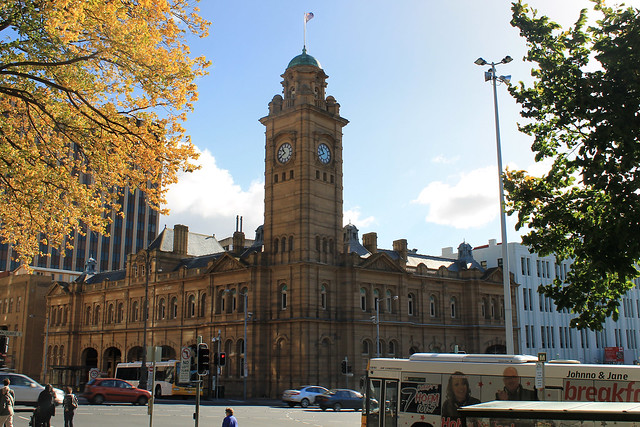
28APR2013 (6)
Hobart Post Office, Tasmania
The Tasmanian Tiger was the island's main predator before the arrival of Europeans. Once Europeans began grazing sheep in Tasmania the Tasmanian tigers were considered a nuisance because of their taste for sheep. The government put a bounty on every Tassie tiger that was killed and before long the only tigers left in existence were caged in zoos. But even that didn't last long and in the early 1900s the last Tassie tiger at the Hobart Zoo died. The tigers have not been seen since and the species is considered all but extinct. I say all but extinct because there is a very very VERY slight possibility that a population of tigers may have survived in the vast wilderness that covers Tasmania's southeast. Expeditions and surveys to find any remaining tigers have returned inconclusive. In the 1930s, after the last zoo tiger died, a biologist went looking for wild tigers and found footprints, but never found any tigers. Some people believe they still exist and sightings are reported but unconfirmed. I'd like to believe that life found a way and that some do exist, eluding humans for nearly a century. I like to believe this because the same story exists with mountain lions of Vermont - the catamount. While reports of them surface every now and then, there is no biological evidence that they still exist. But a few years ago, my Masters supervisor and I were driving to New York and on the rural highways of Vermont a large cat ran across the road in front of us. The cat we saw was definitely a cat, and much larger than a bobcat (which is larger than a housecat - or even a feral cat). To this day, I swear we saw a catamount and because of that I hold high hopes that the Tassie Tiger has cleverly maintained low populations in Tasmania's vast wildernesses.

28APR2013 (14)
Mt. Wellington looming above Hobart Harbour
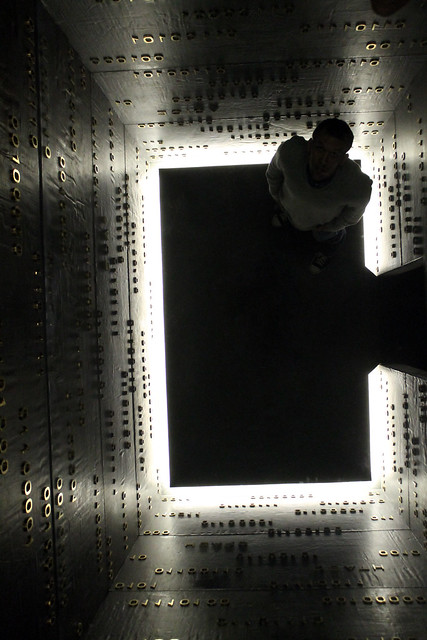
Soon enough, I boarded the ferry from the city centre out along Port Arthur to the museum which is some distance up the River Derwent. The Lonely Planet guide for Australia says that this museum is one that is NOT TO BE MISSED and that it is "a veritable Disneyland for adults." Built right into the sandstone along the waterfront, the huge underground museum is home to a myriad of old and new art pieces including sarcophaguses, Aboriginal Australian art, modern sculpture art, interactive art, and modern paintings. Some of the exhibits I found utterly fascinating like "Kryptos" a dimly lit maze leading to an inner room; along the walls of "Kryptos" are words from the Epic of Gilgamesh in binary code and you get the sense you are entombing yourself as you walk toward the centre. Other pieces I liked included a huge wall of small Aboriginal paintings that fit together to form a much larger mural. There was also a room with a series of lightbulbs overhead. Visitors could take turns holding a handle of sorts which would record the pulse of their heartbeat and the lightbulb directly overhead would begin flashing in sync with your heartbeat. As each new visitor lit their lightbulb, the previous visitor's bulb would move down the line through a room that must have had hundreds of randomly flashing heart beats. But then there was the weird art, like a machine that was designed to replicated exactly the human digestive system. Every day the machine is fed food from the cafeteria and at 2pm the machine poops. Yes. This machine literally poops. It was disgusting and I don't really understand how it is considered art. Nevertheless, the day at MONA was absolutely a day worth the price of admission and I suggest anyone going to Hobart visit the museum because there is something for everyone there!

28APR2013 (37)
"Kryptos" at MONA
I took the ferry back into the city and Danielle met me down at the wharf and we walked over to Salamanca Markets, some of the oldest preserved buildings near Hobart's waterfront that now boast the city's best restaurants and shopping venues. We had delicious pizza from Cargo Bar and then stopped a few doors down at Jack Greene for a drink before heading back to her apartment for the night.

The night wasn't quite over yet as a huge full moon rose in the east and I couldn't help but run outside with my camera and try to capture this beautiful setting. We'll call it a mild success as I need a tripod!

The next morning, Danielle drove me out to the airport and I all too quickly found myself on my way back to Sydney. The five days in Tasmania were absolutely stunning with their jaw-dropping scenery, amazing food, wonderful people, cultural experiences, and wildlife encounters. It made working all through my Easter holiday weekend worth it. But, of course, like all of my trips, there is still so much I need to see in Tasmania and I am already planning my next trip back where I'll tackle Launceston, Cradle Mountain, and maybe even hike the Overland Trek! But that has to wait until another time.

Tasmania: Australia's Island State. Go there. You'll love it!

Thursday, March 7, 2013

New Zealand: Waiheke Island and Stoney Batter

Dates Traveled: 30 December 2012 - 2 January 2013

After spending a few hours on Rangitoto Island with my friends Martin and Lydia, we ferried back to the Auckland wharf, grabbed my bags from storage, and caught the last ferry of the day out to Waiheke (why-HEK-ee) Island where Martin's family stays. Waiheke is a 45-minute ferry ride out from Auckland and it is a wine-lover's paradise with dozens of vineyards strewn across the island. (I am not a wine connoisseur, so I don't really know what types of wine grow best in Auckland Harbour) The island is surrounded by sparkling water, private coves and inlets, and because of the loose sedimentary rock underneath, the hills are very steep and I don't think there was a straight road on the island! Quite a few people live on the island in a number of little communities connected to the wharf by the main road, but even more private drives twist and turn their way through sheep and cow pastures, over steep ascents, and between white sandy beaches. It reminded me a lot of Cape Cod, Martha's Vineyard, or Nantucket due to it's seclusion, it's high-end residents, it's scenic water views, and the awful traffic (though nothing really outdoes Cape Cod traffic on a Friday summer afternoon!).

Martin's whole family was celebrating the holidays at his parent's place and they couldn't have been more welcoming to me, refusing to let me do anything but relax, eat, and help myself to wine or beer no matter how much I insisted I could help out! The house was situated way back away from any main road and up on a hill with a beautiful view of the little cove below, the New Zealand mainland across the water, and the sun setting down behind the adjacent hillside, all surrounded by native forests! It was spectacular! After I set up my tent in the back yard, Lydia, Martin, and I walked down to the water's edge and strolled along the pebbly perimeter of the estuary. It was high tide then, but during low tide the water retreats and reveals an expansive shelf of sticky, mucky, salt marsh. Little crabs darted around the rocks, and rock oysters were fastened to almost every little bit of rock covered by water at high tide.

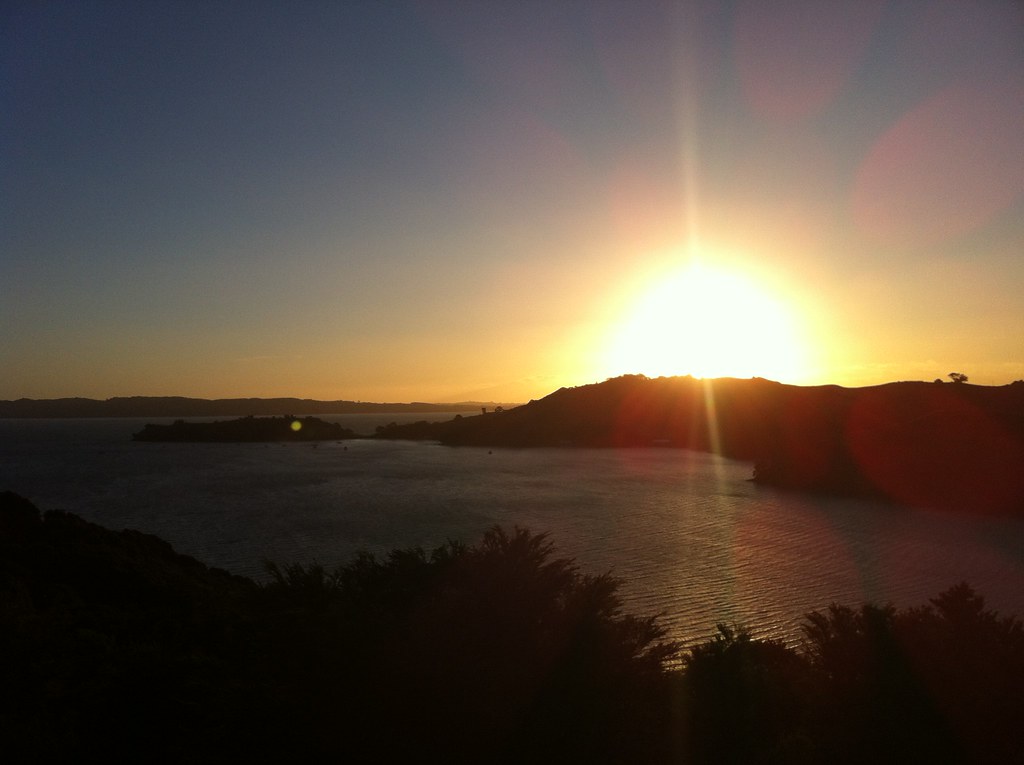
Sunset over Awaararoa Bay
Sunset over Awaararoa Bay (don't ask me how to pronounce that!) on Waiheke Island
To be honest, not much happened those next few days. We did go to Onetangi Beach the morning after I arrived and spent a few hours there. Being as terrified of swimming in the ocean as I am, I was determined on this trip to start getting over that fear! I'm a fine swimmer, but I just am hesitant when it comes to the ocean. Well, I enjoyed the warm waters of Onetangi Beach, but the wind was a bit much so we decided to call it quits and headed over to Wild on Waiheke, a beautiful vineyard/brewery with delicious pizzas and beer, cider, and wine (had to try a bit of each!) and there were all sorts of games for Martin and Lydia's little nieces and nephews to play, but it looked too fun so we eventually joined in the extra-large chess set and bocci ball - but there were also more grown-up activities like volleyball, laser-skeet shooting, and archery! Soon, though, the rest of the family headed back to the house while Martin, Lydia, and I drove up to the Peacock Sky Vineyard, which the rest of the family had raved about earlier, for a little bit of a wine tasting. It was good wine, and the food they paired it all with was delicious, but again, I just don't know my wines well enough to be able to say, "The acidity of the Cab Sav really brought out the flavour of the garlic chicken skewer." (I don't even know if cab savs have acidity or if they pair well with chicken. Probably not. Oh well. I do know that Cab Sav is a wine, though, so there's a plus!

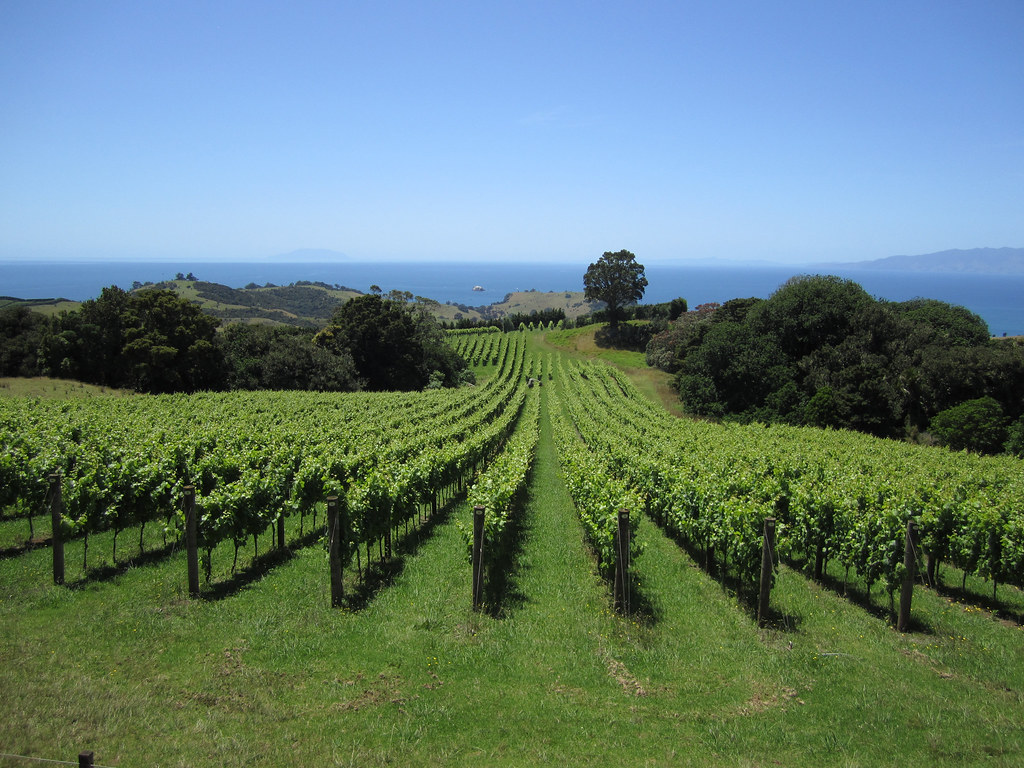
Waiheke Island Vineyards
Rows of grapes on Waiheke Island
On the way back down the road to the house we saw a few pukekos which are these birds with brilliant navy blue plumage and a bright red beak perched up on top of spindly legs. There were just two of them rummaging around a fence post, but I didn't have my camera handy enough to get a photo of them before they darted off. People always say that New Zealand is the place to go if you want the Down Under experience where no animals will kill you (unlike Australia) and this is true. What took me by surprise were the number of amazing birds here! Not only did we see the pukekos, but at night you could hear moreporks calling to each other across the bay (here's a YouTube video which doesn't show much, but you can at hear their distinct, "More-pork!" calls), and during the day we would frequently see tuis (TOO-ees) flitting through the trees with their black bodies and white bobble-feathers at their necks. Also, just down along the bay below the house is a protected nesting ground for the shore dottrels and we frequently saw them flying around.

I think it was New Year's Eve by this point and after a great barbecue dinner and the little kids soon went to bed. Us adults then sat around drinking and playing a card game called, "asshole" which was really fun and I'll probably introduce it to my family at some point - but I forgot how to play... That was a nightly occurrence, but after playing this night, we walked up the very steep driveway to the top of the hill to see if we could get a good show from the Auckland New Year's Fireworks. Well, we saw the fireworks, but they were extremely uninspired and dull. There were maybe two or three big sprays of pyrotechnics from the top of the Sky Tower, but then the show was over and we had to manage our way back down the driveway.

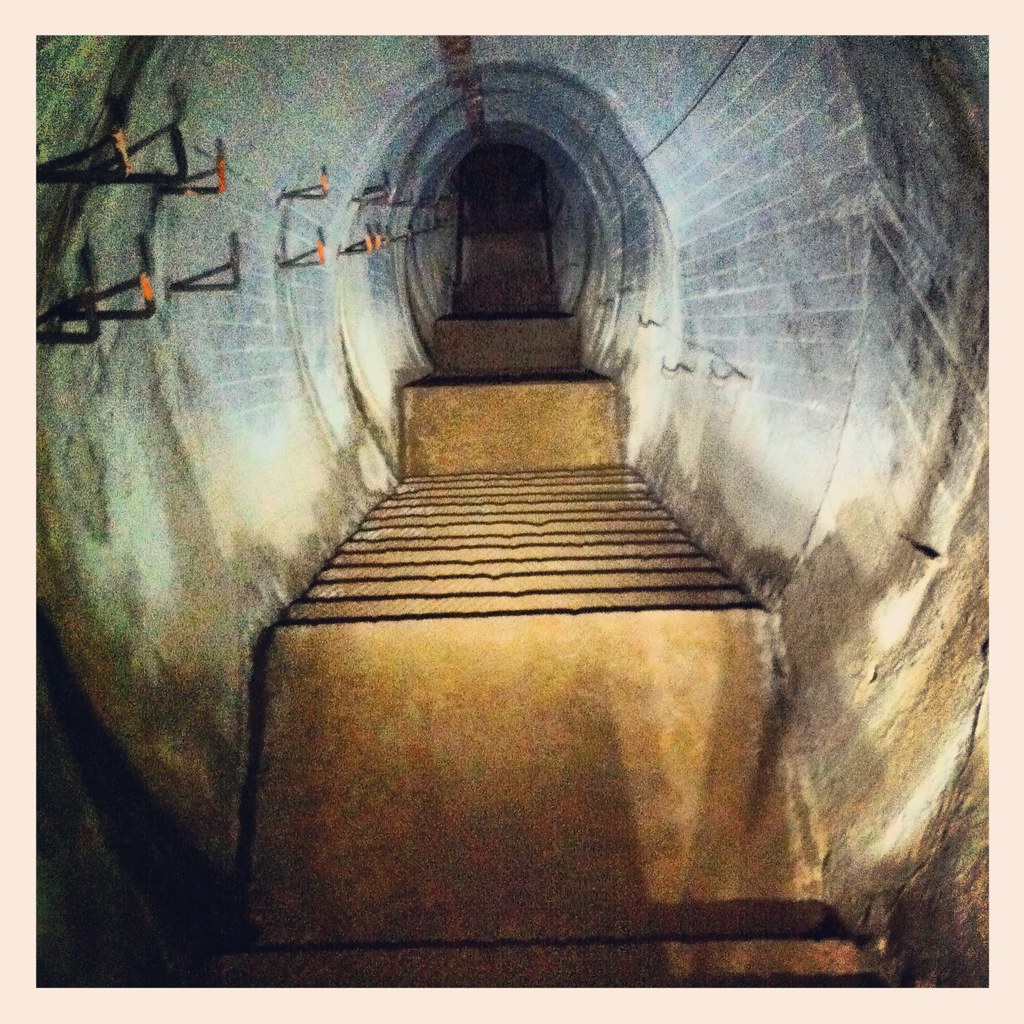
The next morning was the first day of the new year and Martin and his brother impressed us all with homemade eggs benedict and it wasn't long before everyone packed up into the cars for a mini day-trip out to the northeast point on the island to the Stoney Batter Historic Reserve - a WWII gun battery that was part of a network of stations around the perimeter of the Hauraki Gulf. Built by the Kiwis and funded by the US Military, this network of battlements were set up to protect Hauraki Gulf and Auckland Harbour from any incoming threat from the enemy. The US got involved because the US Navy's ships used the protection of Auckland Harbour during the war. Stoney Batter's guns could fire far beyond the line of sight so the various radio stations would report the location of an enemy ship to the radio control centre on top of Rangitoto Island who then would call to Stoney Batter and let them know which way to point their weapons. While the threat of enemy invasion was real (3 Japanese subs did sneak past Sydney Harbour's defenses and sank a British battleship), the enemies never came and the battery never saw real action. The entire complex is pretty astonishing though - the three gun batteries are all connected by over a kilometre of underground tunnels which you can tour with the aid of a very bright torch, provided by the very knowledgeable woman who was attending the station, though she was a bit gruff and insisted on giving a little lamb a bottle of formula before taking our money. There is also a little "museum" there which is nothing more than a storage room full of photos, maps, and bits and bobs from the machinery that used to be in the tunnel systems. It appears as though the tunnels and bunkers are being renovated, but we couldn't be sure. It was nice to get out of the heat though and into the dark, dank, echoey tunnels! It's definitely something to check out if you're ever there. Once we got out of the tunnels and back into sunlight we walked up the hills in the sheep paddocks to the outside of the batteries and the views of the Gulf were so clear we could easily see Great and Little Barrier Islands way off in the distance!

Stoney Batter Tunnels
Exploring the depths of Stoney Batter Historical Site
On the way back to the house, the whole family regrouped at Man o' War Vineyards for some tasty cheeses, olives, meats, and some wine, of course! What a fun time we had just sitting around talking, joking, watching the little kids play cricket, and eating! But the day was hot and everyone was exhausted so back home we went and while everyone else decided to do a little napping, I nipped down to the bay and took a stroll to the dottrel preserve and around the bend to a wide beach used as the launching site for rock oyster farmers whose farms were just out in the little bay. I was leaving the next morning so I also got my things together to make a quick pack-up in the morning and the rest of the evening was just relaxed on the porch looking out over the water while the sun set over the hills.

No better way to welcome in a New Year than this!

Tuesday, March 5, 2013

New Zealand: Auckland and Rangitoto Island

Dates Traveled: 29 December 2012-2 January 2013

New Zealand became the 15th country I've been to (or 18th, depending on how you count the countries of the UK) late last year. I knew I wasn't going to be able to afford the ticket back to the US for Christmas/New Year's but then I heard that my friends Lydia and Martin - classmates of mine from Vermont - were going to be spending a few weeks in Auckland with Martin's family, half of whom live there, for the holidays. I politely asked, not wanting to intrude on their family time, if I could stay with them for a few days, figuring that if I couldn't get home to see family, I may as well see friends in a new country. And with their blessing, I planned my week-long trip, packed my bags and tent, and was on my way.

I flew Air New Zealand for the first time and was giddy with excitement when the Flight Safety Demonstration Video came on because being shortly after The Hobbit came out in cinemas, New Zealand's Middle Earth tourism sector was booming again. The video was well done and includes all of your favorite Hobbit/Lord of the Rings stars teaching you about the safety features of the aircraft. Take a look:
And upon landing, the fun just continues as you exit the airport through a tunnel of rocks presumably from the Dwarf Kingdom and once you reach the baggage claim area you are greeted by one of the Dwarf Lords! I don't think I could stop smiling!

I had a little bit of trouble getting my tent and camping gear through customs. Because both Australia and New Zealand have sensitive native species, both governments to above and beyond the call of duty to make sure you're not tracking foreign-born plants or animals along with you or your gear. It takes an extra 15 minutes when you pick up your bags, but if your stuff is dirty, you'll get a free wash out of it! But soon I was on my way on a shuttle bus into Auckland.

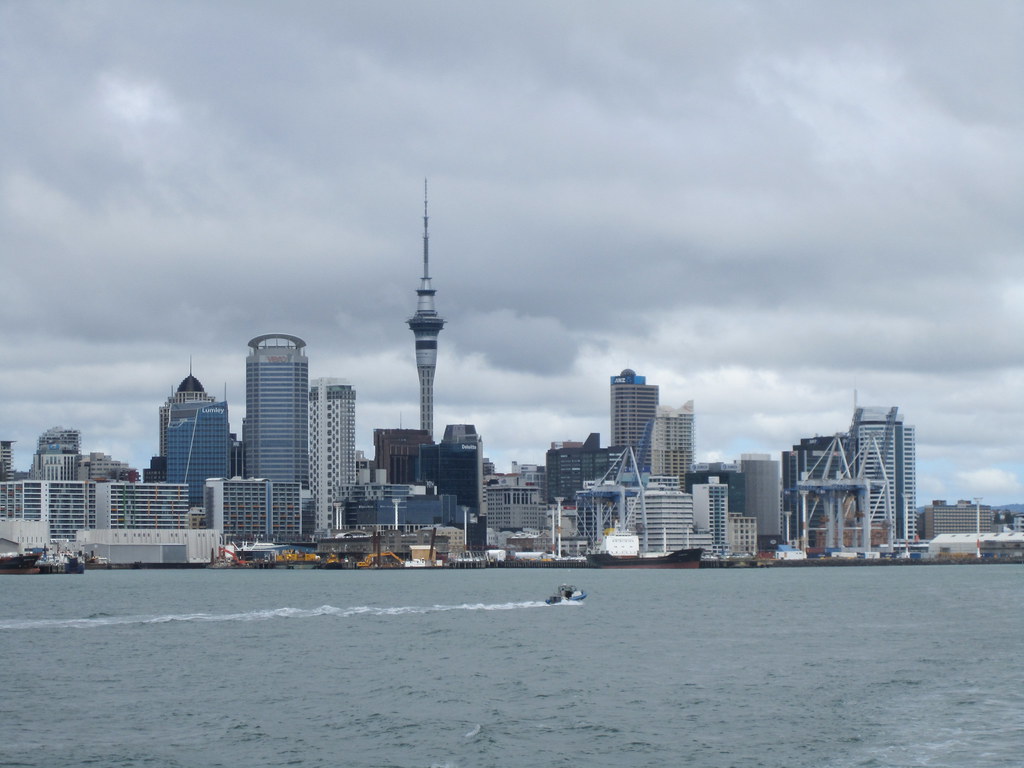
It was almost 9PM when I arrived at the City Road YHA hostel, which was a nasty, dirty, bare-bones hostel, and I was told I'd be lucky to find anything open for dinner, so I quickly stashed my bags in my room and headed out in search of a good New Zealand bite to eat; I found a Manhattan pizza by the slice shop about to close up, but they gave me a few pieces of pie which I scarfed down and then headed out to explore what I could being so late. I took a stroll down Queen Street into the CBD which still had all the Christmas lights and decorations up. It is a pretty city, about the size of Grand Rapids, Michigan, I'd say, though its skyline is more iconic, I think - especially with the domineering Sky Tower which was all lit up at night and rather beautiful! I found a few local pubs on Vulcan and Durham Lanes where I started my New Zealand beer sampling, really enjoying my Moa Original Lager. I didn't stay out too late because I needed to get up early enough to meet Lydia and Martin down at the ferry wharf.

30DEC2012 (8)
Auckland city skyline from the Rangitoto Ferry. It's an impressive little city, but I stress it is a little city - very walkable and not ever too busy. Quite relaxing, really!
The next morning was Sunday and while it was early, it was not bright and threatened to rain all day. I dropped my bags off at a hostel's storeroom closer to the CBD and waited for Lydia and Martin's ferry from Waiheke Island to come in. And sure enough, right on time, I saw my two good friends, who I hadn't seen since their wedding a year and a half ago in Vermont! It was so good to see familiar faces, especially after a less than exciting Christmas. We went back to Vulcan Lane for a nice breakfast, though we missed our ferry out to Rangitoto Island and had to wait another 45 minutes for the next ferry which gave us a little bit of time to walk around the CBD, do a little bit of souvenir shopping, and catch the next ferry on time.

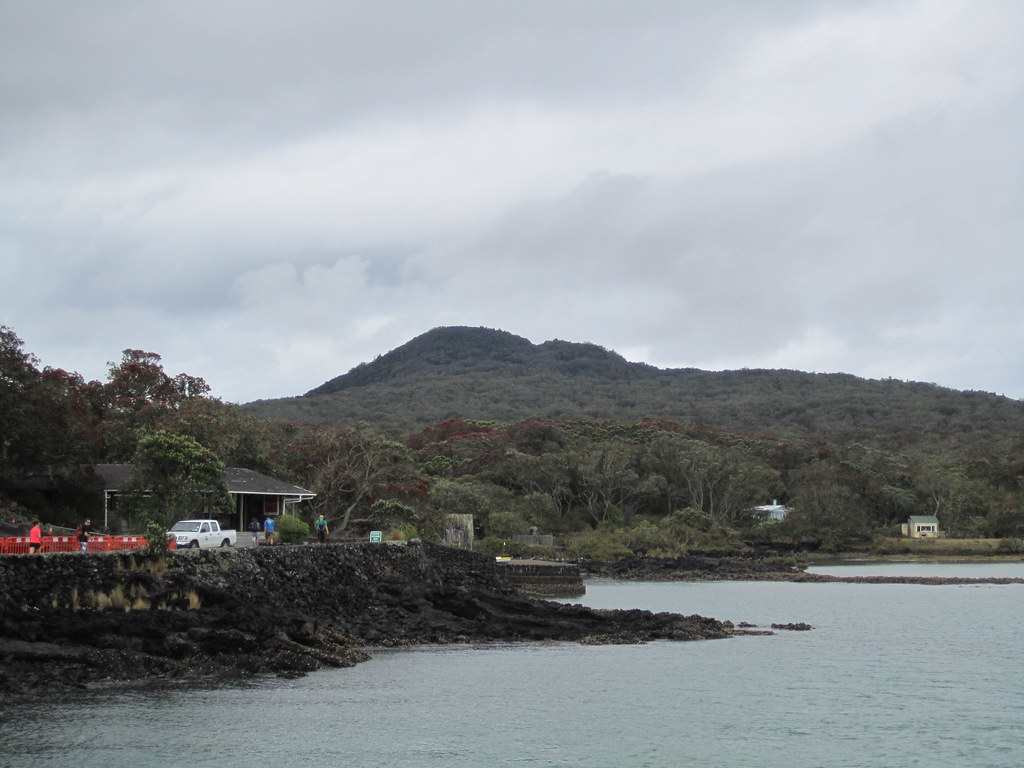
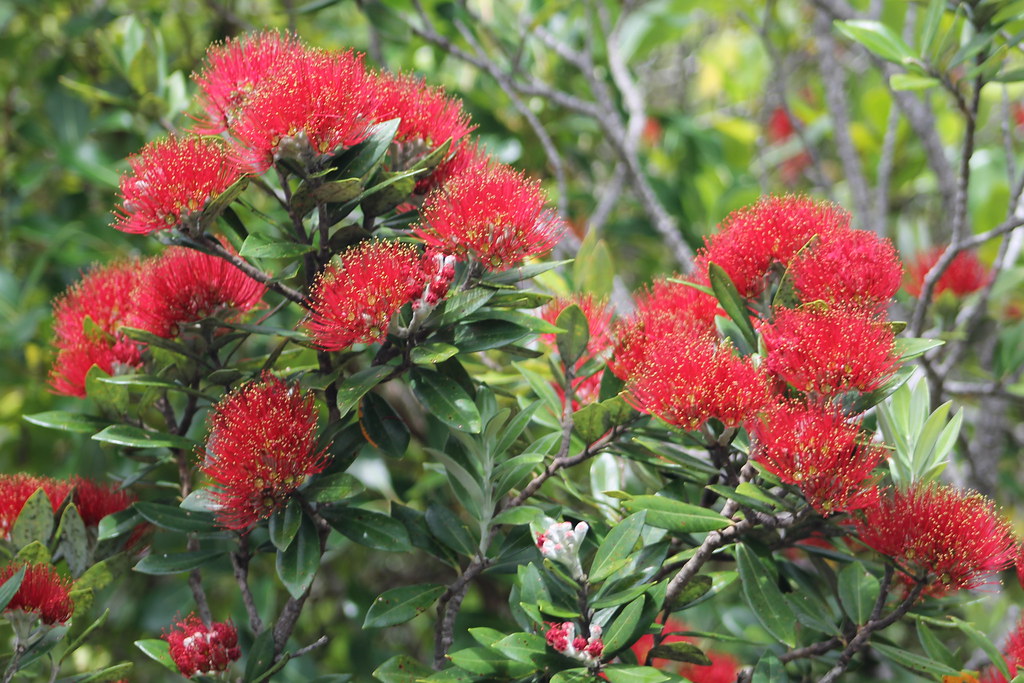
Auckland is a city built on a series of hills that have all, in their past, been active cones of volcanoes since about 250,000 years ago. Rangitoto Island is the most recent of these volcanoes, having erupted only 600 years ago! Before Rangitoto erupted, there was an island in the harbour, but Rangitoto rose up out of the water right next to Motutapu Island, and Rangitoto is huge! It's hard to believe that this island erupted out of the Earth within the history of human habitation of New Zealand (having been discovered by the Maori people only about 800 years ago!). While mostly forested now, there are still wide expanses of bare basalt (lava rocks) where plants haven't yet colonised. One of the dominant species found on Rangitoto, and throughout New Zealand for that matter, is the pohutukawa tree (PUH-hoo-tuh-KAH-wuh) - a very regal tree with wide, shady, leafy branches and hundreds of bristly red flowers. The pohutukawa is revered in Maori culture and it is now illegal to remove the trees from wherever they grow.

30DEC2012 (12)
Rangitoto Island from the Ferry Wharf
The ferry ride took about half an hour to get to the island and offered some nice views of the city, though the weather was still threatening rain. Once to Rangitoto we started the relatively short and easy ascent up to the caldera at the top which only took about an hour. At the top, the first thing we came to was the gaping pit that is the caldera of the volcano. It was a bit odd because you typically think that at the top of a mountain there should be a summit, but with volcanoes you get to the top only to look down into that hole. And it was deep! I'm not sure the measure, but I was impressed with how deep it went!

30DEC2012 (49)
The red flowers of the pohutukawa tree on Rangitoto Island
Because of it's high elevation and unique position guarding Auckland Harbour, a radio station was built as part of New Zealand's WWII defenses and a few of the buildings are still up near the top. The weather was starting to clear up and we were getting our first clear views of the skyline and the rest of Auckland Harbour with it's beautiful islands poking up out of the water, and far off in the distance to the north and east we could see the larger islands of Great Barrier and Little Barrier Islands and the Coromandel Peninsula. If there's one thing I learned about this part of New Zealand it is that volcanic activity makes very large landforms that dominate the landscape around them! And if I thought Rangitoto and the Auckland volcanic field was impressive, I was sure in for some awestriking moments in the days to come.

On the way down from the Rangitoto Summit we followed another short trail to the Lava Tunnels. These tunnels are formed when the very fluid basaltic lava flows down the side of the volcano. The surface of the flow is in contact with the cold air and it forms an insulating crust under which the hot lava can continue to flow. This process forms these conduits or lava tubes which can be large enough to crawl through once the lava all hardens. A great example of lava tubes can be found at Craters of the Moon National Monument & Preserve in Idaho in the US. We navigated our way through a few of the tunnels and then had to hi-tail it back to the ferry wharf to catch the ferry back to Auckland so we could be on time to catch our ferry out to Waiheke Island.
Creative Commons License
This work by Eric W. Portenga is licensed under a Creative Commons Attribution-NonCommercial-NoDerivs 3.0 Unported License.