On my last day in Tasmania, Danielle had to do some work and dropped me off at the harbour in downtown Hobart. I bought a ticket for a ferry and admission to one of Australia's - if not the world's - premiere museums: the Museuem of Old and New Art (MONA). Before the ferry left, I spent about two hours walking around town and visiting the Tasmanian Museum where I learned more about the Tasmanian Tiger.
Hobart Post Office, Tasmania
The Tasmanian Tiger was the island's main predator before the arrival of Europeans. Once Europeans began grazing sheep in Tasmania the Tasmanian tigers were considered a nuisance because of their taste for sheep. The government put a bounty on every Tassie tiger that was killed and before long the only tigers left in existence were caged in zoos. But even that didn't last long and in the early 1900s the last Tassie tiger at the Hobart Zoo died. The tigers have not been seen since and the species is considered all but extinct. I say all but extinct because there is a very very VERY slight possibility that a population of tigers may have survived in the vast wilderness that covers Tasmania's southeast. Expeditions and surveys to find any remaining tigers have returned inconclusive. In the 1930s, after the last zoo tiger died, a biologist went looking for wild tigers and found footprints, but never found any tigers. Some people believe they still exist and sightings are reported but unconfirmed. I'd like to believe that life found a way and that some do exist, eluding humans for nearly a century. I like to believe this because the same story exists with mountain lions of Vermont - the catamount. While reports of them surface every now and then, there is no biological evidence that they still exist. But a few years ago, my Masters supervisor and I were driving to New York and on the rural highways of Vermont a large cat ran across the road in front of us. The cat we saw was definitely a cat, and much larger than a bobcat (which is larger than a housecat - or even a feral cat). To this day, I swear we saw a catamount and because of that I hold high hopes that the Tassie Tiger has cleverly maintained low populations in Tasmania's vast wildernesses.
Mt. Wellington looming above Hobart Harbour
Soon enough, I boarded the ferry from the city centre out along Port Arthur to the museum which is some distance up the River Derwent. The Lonely Planet guide for Australia says that this museum is one that is NOT TO BE MISSED and that it is "a veritable Disneyland for adults." Built right into the sandstone along the waterfront, the huge underground museum is home to a myriad of old and new art pieces including sarcophaguses, Aboriginal Australian art, modern sculpture art, interactive art, and modern paintings. Some of the exhibits I found utterly fascinating like "Kryptos" a dimly lit maze leading to an inner room; along the walls of "Kryptos" are words from the Epic of Gilgamesh in binary code and you get the sense you are entombing yourself as you walk toward the centre. Other pieces I liked included a huge wall of small Aboriginal paintings that fit together to form a much larger mural. There was also a room with a series of lightbulbs overhead. Visitors could take turns holding a handle of sorts which would record the pulse of their heartbeat and the lightbulb directly overhead would begin flashing in sync with your heartbeat. As each new visitor lit their lightbulb, the previous visitor's bulb would move down the line through a room that must have had hundreds of randomly flashing heart beats. But then there was the weird art, like a machine that was designed to replicated exactly the human digestive system. Every day the machine is fed food from the cafeteria and at 2pm the machine poops. Yes. This machine literally poops. It was disgusting and I don't really understand how it is considered art. Nevertheless, the day at MONA was absolutely a day worth the price of admission and I suggest anyone going to Hobart visit the museum because there is something for everyone there!
"Kryptos" at MONA
I took the ferry back into the city and Danielle met me down at the wharf and we walked over to Salamanca Markets, some of the oldest preserved buildings near Hobart's waterfront that now boast the city's best restaurants and shopping venues. We had delicious pizza from Cargo Bar and then stopped a few doors down at Jack Greene for a drink before heading back to her apartment for the night.
The night wasn't quite over yet as a huge full moon rose in the east and I couldn't help but run outside with my camera and try to capture this beautiful setting. We'll call it a mild success as I need a tripod!
The next morning, Danielle drove me out to the airport and I all too quickly found myself on my way back to Sydney. The five days in Tasmania were absolutely stunning with their jaw-dropping scenery, amazing food, wonderful people, cultural experiences, and wildlife encounters. It made working all through my Easter holiday weekend worth it. But, of course, like all of my trips, there is still so much I need to see in Tasmania and I am already planning my next trip back where I'll tackle Launceston, Cradle Mountain, and maybe even hike the Overland Trek! But that has to wait until another time.
Tasmania: Australia's Island State. Go there. You'll love it!
After spending a week at a geomorphology conference (and the months before it preparing), my friend, Caitlyn and I decided it was time for a bit of sightseeing. She's been in Australia for a while and hadn't yet been down to Melbourne and since I also had not yet been down there, we found a cheap deal on tickets with EasyJet and the day after my conference ended, were on our way to Victoria where we would spend two days in Melbourne and two days driving the famous Great Ocean Road!
Melbourne (pronounced "MEL-bin" and not "mel-BORNE" as my dad likes to say) was awesome! It's the second largest city in Australia, only a half-million behind Sydney, but has been able to retain a larger amount of it's Victorian charm. A lot of people say that Sydney is the cosmopolitan international city in Australia whereas Melbourne is the cosmopolitan Australian city in Australia, and I was able to see that. The city, while big and having everything a big city must, was so much quieter than Sydney and it just felt more relaxed and easy-going. In fact, it took us a while to figure out why the city was so quiet, and we realised it is because there are no buses in the whole of the Downtown area! It's true! Melbourne has maintained its tram network, the world's largest, which dates back to 1885! And while the trams are noisy when they rumble on by, once they are gone, you don't hear anything but cars going by, which is so much quieter than buses constantly starting and stopping.
Melbourne tram in front of Flinders Street Station
We flew into Tullamarine Airport (Melbourne International) and were able to hop a bus to the city for relatively cheap, and then the bus company, after dropping us off at the Southern Cross Train Station, had other mini buses that drove us right to our hostel, free of charge! Caitlyn booked us a room in a clean hostel, right down near Federation Square, arguably the main central meeting place in the city. The hostel, the Greenhouse Backpackers, was located just around the corner from Federation Square on Flinders Lane, right in the middle of all sorts of alleyways lined with tiny cafés and coffee shops and stores of all kinds. We were super-hungry and Caitlyn, who had planned most of the goings-on of the Melbourne part of our trip, led the way east to a Chinese restaurant, Chin Chin, she heard about and we gorged ourselves on a delicious smattering of menu items. Caitlyn was always on the lookout for restaurants that didn't just offer your everyday generic menu items but something more and unique that you couldn't just get anywhere else. I was glad she'd done her research because we dined like royalty in Melbourne!
After lunch, as full as we were, we walked back toward the hostel and wandered around the lanes and alleys for a little bit, taking in some of the nearby sights including the magnificent Flinders Street Station and St. Paul's Cathedral. It felt a bit odd walking around because it was early December and everything was decked out in Christmas decorations all over the city, but it was HOT! It was such a weird feeling seeing and hearing all the Christmas cheer without the cold and the snow that we are used to back home in Michigan! But our destination was another place Caitlyn had heard about called, Little Cupcakes. After walking past it two or three times, we finally found it and stepped in for a wee coffee and some of the dare I say cutest cupcakes I'd ever seen!
It was still early in the afternoon and we decided we'd walk off our lunch on the way to the Old Melbourne Gaol (jail), an historic building in both the city's and Australia's past. We got there right before the last tour started, and while it was a bit more expensive than the general ticket to get in, it was SO worth it! You get put in a group that is led into the Gaol as if you had been arrested. The men are lined up across from the women and everyone is given an inmate card with the background of a convict and then your guide, the Warden, makes it very clear that you are to follow all rules of the Gaol and address him or her as Sir or Ma'am throughout the tour. It's kind of funny at times, but if you have a good guide, like we did, you quickly become afraid of stepping out of line (though humourous comments were appreciated). The warden checks you for any contraband and then leads you into the holding cells for the inmates, one of which is a giant padded room, and you learn how certain inmates, like the pedophiles, get a separate outdoor space in the yard during physical activity time because otherwise they'd surely be beaten to a pulp by the other inmates. It seems short, but the tour took about half an hour and culminated in a photo op where you get to hold up the inmate clapboard and have your mugshot taken! The tour only takes you through the holding cells, but the other half of the Gaol is in the main Men's hall - three stories of cells just like in the movies, lining a central corridor with walkways around the perimeter and stairways at the ends. In each cell you learn about specific convicts, or about jailed women, or immigrants, or whatever the case may be, but the Gaol is almost most famous for being where Ned Kelly, the famous Australian outlaw, had his last meal before being hanged.
Thoroughly worn out by history, Caitlyn and I headed back toward the hostel, but not without stopping at the James Squire brewhouse (which I thought was just a Melbourne thing, but apparently the first James Squire brewery is along the Parramatta River near Sydney). The beer was good anyway and we were back to the hostel soon enough for a wee nap before once again heading out for more alcohol and food! We got dressed up a bit and Caitlyn lead the way to Mamasita for some delicious late-night Mexican food and drinks in this upstairs restaurant that was well-worth the 20-minute wait for a table! Good food, delicious drinks, and great music put us right in the mood to find a place to go out for the evening. And while we asked around for a good place to find free live music, no one could tell us of anything nearby aside from places with $20 covers, so we went off to find our own adventure.
And find it we did in the form of Cherry Bar on AC/DC Lane where there was a live band covering The Doors in celebration of Jim Morrison's birthday. It wasn't really a dive-bar per se in that it was crowded, loud, and everyone was having a great time! The band played for another hour or so before calling it quits, and we followed suit, headed back to the hostel and crashed pretty quickly into bed.
We woke up early the next morning and headed off to one of the nearby cafés in the alley-ways for a good breakfast place. We found a place, and it was good, but the food was pretty generic, and not much to remember. Caitlyn wanted to do a bit of shopping so we stopped in a few stores and then headed out to the Queen Victoria Markets which are the largest open-air markets in the Southern Hemisphere. Frankly, I was pretty unimpressed; the market stalls were filled with the usual knick-knacks, Aussie t-shirts, and iPhone covers that you can find in Sydney's Paddy's Markets. Maybe the produce was good, but we weren't planning on cooking, and there was only one aisle, off to the side, where local Melbournian vendors were selling their art. Needless to say, we didn't stay long but made our way over to La Trobe street and hopped on one of the free trams that loops the Downtown area.
Back at Federation Square, Caitlyn and I decided to split up for a few hours. She stayed in the Square and stopped into the Australian Centre for the Moving Image and National Gallery of Victoria and I took my camera and headed off to the massive Botanical Gardens. While much of Melbourne is relatively flat, the Botanical Gardens are anything but! Paths wander in and out of groves and parks and plazas and statues of royalty, but I eventually found myself looking up at the the Shrine of Remembrance, Melbourne's ANZAC (Australia and New Zealand Army Corps) Memorial. Sydney's is nice, but Melbourne's is Grand! I hadn't planned on spending as much time as I did there, but the memorial is so full of symbolism in the carved reliefs high up in the central sanctuary and an outer hall with the flags of each of the main branches of the armed services. You find marvelous views of Melbourne's skyline from the rooftop terrace of the Memorial and down in the crypts are more rooms honoring fallen soldiers and special moments in military history.
Looking at my watch, I needed to get a move on to meet Caitlyn back at the hostel but I still had a bit more of the Botanical Gardens to walk through, and I was going to go a little out of my way to see the Melbourne Olympic Stadium (which I found out is actually the Cricket Grounds and farther than I was willing to walk!). But I did walk along Batman Avenue and I passed the Rod Laver Arena where the Australian Open is held.
The afternoon was drawing on and after rendezvousing, we headed out to the suburb of Fitzroy to have dinner and beers at the Little Creatures Dining Hall where we had delicious pizza and amazing doughnuts!! Fitzroy reminded me a lot of Burlington, Vermont, with its anything-goes attitude, hole-in-the-wall boutiques and cafes, and somewhat bohemian vibe. I think it was in Fitzroy that we decided what we'd do with the rest of our evening and concluded that the best option would be to go to an open-air cinema in St. Kilda, hosted by Ben & Jerry's Ice Cream to see a showing of the sing-a-long version of Grease! Haha.
The trams took us from Fitzroy down to St. Kilda and there was plenty of time before the movie started for us to walk out to the end of the St. Kilda Pier Breakwater where the Lonely Planet Guidebook mentioned we could see tiny fairy penguins swim ashore to their nests in the rocks of the breakwater at sundown. Not too many people were out on the breakwater when we got there which allowed us to enjoy a little bit of fresh air out and watch kite surfers on Port Phillip Bay in front of the Melbourne skyline. We didn't see any penguins swimming ashore, but more people were coming out to the breakwater and soon we noticed tourists pointing between the rocks and shoving their cameras into the holes. Clearly, there were nesting penguins already ashore and we walked right past them! I kind of felt bad for the little penguins, having all those cameras and flashes being shoved in their faces, but they took it like champs and either didn't notice or pretended not to, anyway. I was conflicted because I didn't want to be part of the mob, but these were the first penguins I'd seen in the wild and had to have my own proof, so I briefly joined the mob of tourists, took my photo and left. The sun was actually setting now, so we headed over to the open-air cinema, got our free samples of B&J ice cream, rented some seats (and blankets because it was windy and freezing!), and kicked back to enjoy singing along to Danny and Sandy, Frenchie, Rizzo, Jan, Kenicke, Doodie, and the other guy. I should have known, or realised before, but it only dawned on me that Sandy was a new student from Australia, played by then-breakout-star Olivia Newton-John. Who knew? Apparently everyone else.
Once the movie was over, Caitlyn and I headed back into town to get some sleep before our road-trip started the next morning. But before any good road-trip can start, one must have a good, filling breakfast, and Caitlyn was back on top of things and we found ourselves the next morning having an amazing breakfast at The Hardware Sociéte where I wish I could remember what I had for brekkie because it was to die for! And Caitlyn was in Heaven, too, snapping photos of the light and cheerful café before heading back to the hostel one last time to pick up our bags and then it was off to pick up the rental car for our journey along the Great Ocean Road!
**I am way behind in updating my blog. I have about 10 mini-trips that I need to write about, so here we go with the first**
In August, I moved down to Australia from Glasgow, Scotland, to start the next stage of my PhD, studying landscape change of the Tablelands of southeastern Australia. The crucial part of my research is based on the samples I collect in the field, which I was finally able to start doing in October 2012, after a preliminary trip in August to scout out potential sampling sites.
View from the lookout in Namadgi National Park in the Australian Capital Territory
The first trip in August was fairly relaxed. My supervisor from Glasgow came down for the week and we were joined by my supervisor from Australia and a local colleague of my Glasgow Supervisor's for a few days each. The Tablelands is a landscape dominated by rolling hills - sometimes mountainous - with gum tree forests and flat open grazing pastures in the valley bottoms. They spread a good distance, over 500km from north of Bathurst to south of Cooma, and almost 200km wide from Goulburn to Gundagai - roughly. When the European Australians first arrived to the Tablelands, the valley bottoms were soggy swampy meadows with sometimes large ponds in them. Water flowed through the landscape, though not in defined channels. With the introduction of grazing agriculture came lots of deforestation, which, paired with Australia's variable drought-dominated and flood-dominated climate regimes, led to the incision of these waterways into the valley bottoms, carving out deep gullies. As gullies were eroded in some parts of the landscape, the sediment released from them was deposited further downstream, covering the swampy meadows. Whether the cause of this widespread landscape degradation came from introduced grazing agriculture, from natural cyclical processes that happened to start at the same time as European grazing, or from fire-agricultural methods employed by Aboriginal Australians, we cannot be sure, and that is the purpose of my research.
So fieldwork involved me, and one of a handful of great field assistants, going into these gullies and collecting sediment samples from the gully walls and later I will determine burial ages for the sediment which will help me interpret when widespread gullying and sediment deposition on the Tablelands began.
While this region of Australia is arguably not all that scenic - there are no rough coasts, rainforests, mountains, or outback deserts - the rolling hills are beautiful and we frequently drove in and out of Australian bush land which provided plenty of opportunities to see amazing Australian wildlife.
In August, I was more focused on tuning my eyes to what was happening on the landscape. At one of our first stops, near Bevendale, we visited a site my Glasgow supervisor had previously worked on. A few years ago, to get to the landowners' house - we always asked for permission to gain access to land and let them know we were there - you'd just drive over a bridge spanning a 5 metre-deep gully. My supervisor was shocked to see when we got there that the bridge had been totally wiped out. We forded the stream and when we found the homeowners, they told us that the bridge had been washed out by the biggest flood they'd experienced. The water level rose up those 5 metres to the bridge and just plucked it up, carrying it downstream. This was not in any sort of gorge or steep landscape, nor was the upstream area all that large, but seasonally, this part of Australia can be subject to massive floods!
A few days later we visited another site along a stream called, Birchams Creek, and it ended up being one of my favorite sites that I returned to a few times. At this site, just 40 minutes outside of Canberra, the Australian capitol city, I was guaranteed to see at least 20 (sometimes upwards of 50+) kangaroos! Australians kind of see kangaroos like we, in Michigan, see deer. They are everywhere and often end up crushed by cars on the side of the road. But here, back in the countryside, they were everywhere and each time I visited, I would see them hopping up and down the hills, in and out of the paddock fences, and sleeping under trees in the middle of the day. So cute to see, too, when the little joeys are sticking their heads out of the mothers' pouches!
Overall, August field work was kind of dull - more driving than work. But I did get one experience most Australians do not: I was in the middle of a snowstorm! It was the second to last day of field work and we'd kind of exhausted the options of places to visit, so my supervisors and I took a drive to a peat bog on the southern slopes of the Brindabella Range which makes up the border between the Australian Capital Territory and New South Wales. We drove up through the mountains through Namadgi National Park, through a snow gum forest, and stopped at a scenic overlook where you could see the flat valley bottom below, surrounded by steep mountains. It was windy and cold, so we didn't stay long and kept driving down the other side of the mountains. We stopped at the Yaouk Peat Bog on the other side of the mountains and discussing how we might use it in my research and while we were there it started to snow. It wasn't really a blizzard, that would be exaggerating, but there were plenty of small specks of snow falling all around us as we got back into the car and drove toward Adaminaby for lunch. By the time we arrived and sat down in the small town's cafe, it was near blizzard conditions - big wet flakes of snow were swirling around outside and even the woman who ran the cafe ran outside with her camera because she had never seen anything like it! It cleared up enough as we left for me to see the Big Trout (Australia, like the US, is proud of their BIG roadside attractions) but then we drove back into the storm as we headed to Cooma and up to Queanbeyan.
October eventually rolled around and it was time to head back out into the field to actually collect some samples. I had two field assistants lined up to help me out over the two and half weeks of work and they were both great (we will call the first Britney and the second Tracy). Both were gung-ho undergrads who wanted to get experience with field work and couldn't have been better suited for the work. Britney was more interested in biology but hadn't had any field experience before and was curious to know what it was like and while I got excited about sediment and rocks she got excited about all the different animals we came across from sheep and horses to cats and puppies. Tracy was a seasoned environmental science undergrad who had a keen eye for approaching geologic problems and often kept me on track for what I was supposed to be doing. Both were Australians, which was important for me because I would be talking to landowners, asking their permission to go on their land, and knowing how suspicious Americans can be about people coming on their property, I didn't want to say the wrong thing or ask the wrong question, so it was good to have Britney and Tracy as field assistants. Also, both had excellent taste in music which was important for the long car rides.
Britney and I went into the field first, sticking around the Goulburn area. We visited a few streams nearby and collected samples, and scoped out a few more sites I could potentially come back to. But after a few days, Britney had to be back in Sydney so we drove the two hours back, I stayed the night in the city, and then picked up Tracy the next morning and drove back out to the field. Tracy and I went a bit further south, more toward Lake George - an inland lake with a large surface area (so it looked big) but a small depth of only 2 metres (so there wasn't much water). While at one of my sites, situated right next to a wide and long section of the stream that was more like a pool, we saw a few splashes and this little brown-backed critter with its nose just sticking out of the water, zig-zagging back and forth across the pool, spending a lot of time under the banks where sticks and weeds were all mashed together. It was mid-day, and though we both knew that platypuses are typically out in the evening and at night, we were sure that is what we saw! It was difficult getting photos of the animal (which I desperately wanted!) and when we asked some landowners further downstream if they ever saw any platypuses we were discouraged to hear that they'd only seen one platypus, thirty years before. They tried convincing us we saw a water rat, but the animal we saw did not have the white fur on its back like a water rat would have had and water rats swim on the surface whereas this critter spent most of its time underwater. Though unconfirmed, we decided that we had been some of the lucky few Australians who have seen the elusive platypus out in the wild and I got to check another Aussie animal off my list!
Tracy couldn't stay more than three days in the field, so off we drove, back to Sydney, where the next morning I exchanged field assistants again and Britney and I headed back toward Goulburn, but kept driving and eventually steered north toward Cowra. The next few days were fairly uneventful, and wet. Also, I was getting frustrated because I hadn't been to this part of the Tablelands before so I didn't really know where to go to find appropriate sample sites, so there was a lot of driving around. I felt so bad for Britney because she was so patient and tried to be helpful, but sometimes my stress got the better of me. But we got some good samples over those few days and met some friendly landowners who couldn't have been more helpful for us. It wasn't long before a few exciting things happened. We were driving in the hills around Mandurama and off in the distance, on the high hilltops, we could see snow. Britney had never seen real snow in her life before so I drove back up into the hills until we crossed the snow line and stopped the car. Now, I've been in real blizzards, buried under feet of snow, and spent so much time in good snow that I was pretty unimpressed by the light dusting of white we saw on the ground, but it was real fun to watch Britney get out and stomp around in it, packing it into a little snowball and throwing it, and I got a good kick out of her answer when I asked, "Well, what do you think?" and she responded, "It'sso WET!" Haha. It was a great moment and on the way back down the hill we crossed paths with a rural postman who was also stopping to take some photos of the snow. It was definitely a rarity for that time of year and a rarity for Australia in general! The next day we got a bit more excitement when I saw something unusual in one of the grazing paddocks - a small flock of weirdly gangly, 8-foot tall, dinosaur-like birds was strutting across the field a good distance away from the road, but I knew what they were immediately: Emus! I pulled over and grabbed my camera to take about one million photos of them. I wanted them to come closer and even though they didn't, we watched them for a good ten minutes or so!
And then November came around. It was time for me to head back into the field and collect some samples from sites I hadn't focused much time on before. I started off on my own this time, driving through the Blue Mountains north, back toward Manduarama to a site along Grubbenbun Creek I'd been to before, but didn't take samples. After Grubbenbun, the landowners gave me directions for the back-road route to get to Crookwell. It was already the evening and the two-hour drive took me through some beautiful dirt roads through tiny hill-towns with names like Thalaba, Abercrombie River, Peelwood, and Trunkey Creek. I would be sampling the next day north of the town of Laggan, so I stopped at the site to see if I could introduce myself to the landowners. The old couple who answered the door were so nice and and man had been living on the land since his family settled down here, the first European Australians to graze the land, way back in the 1830s! The next few days were standard work days. I'd go to the creek, clear off a fresh sediment surface from the gully wall and remove my sediment samples. After Laggan, I drove down to Queanbeyan where my Glasgow supervisor's former colleague, Jane, lived. Jane had been out with us for a few days in August and was happy to help me over the weekend. We went back to the Birchams Creek site, where again we saw dozens of kangaroos on the hillsides, and we also revisited a site on the western boundary of the Australian Capital Territory. Jane is a geologist and has had a bit of experience working on the Australian landscapes, so it was fantastic to work with someone who brought a professional geologist's perspective to my research and helped guide my field work strategy to be able to collect samples that would best answer my research questions.
But Jane could only help out over the weekend, so Monday I worked by myself again, and on Tuesday, I drove into Canberra to pick up my next field assistant, Drew. Drew had just finished his Honors Thesis on river erosion and sedimentation and happily, for me, was willing to give up a few days of surf to come dig around in the mud and dirt with me! I had a few hours before Drew arrived, though, so I checked out the Australian War Memorial on the outskirts of the city. Canberra isn't much as far as cities go, but it is chock full of museums! I only had about ten minutes in the War Memorial museum, but I will definitely be going back to spend more time there!
I retrieved Drew and we headed south for an hour or so and turned off down a long dirt road. I wanted to collect a different type of sample, mud from the valley bottom of a modern swampy meadow, one that hadn't been gullied through or buried yet. We saw a house that looked like they might own a bit of land and as we drove up, dog started running toward us and a very imposing man stood on the porch of the house. We exchanged hellos as we walked toward each other, and the mood changed immediately. This guy and his wife had just moved out into the country from a small town nearby and were in the process of building a Sabbatical Recording Studio in some of the sheds out back. I forget what his name was - MC something-or-other - but MC was really into his music and worked with local and international recording artists and he and his wife wanted to be surrounded by peace and quiet while working with artists who wanted to get out of your typical city sound studio and into a more relaxing setting for recording their music. They gave us a tour of their recording studio, which was a work in progress. And though I believed their story and liked MC's enthusiasm for music, we were still a little wary to follow them into these sheds where the studio was being built, though MC was so excited to show us the sound-proof rooms and a bathroom with a microphone built into the shower head so the artists could sing before their session and get rid of the jitters. I was actually pretty impressed and excited for their business. It was just such a cool combination of beautiful land, quiet scenery, and high-tech modern recording equipment! Though I do have to say, Drew and I both felt like we'd just stepped onto the set of a real-life horror movie when they took us on the tour of their studio. "Sure, come check out these sound-proof rooms. I won't knock you out with this hammer we're using to install the keyboard. Wait 'til you seethe sound booth shed!" But really, MC and his wife were great people to chat with!
Drew and I carried on with our work, and the next day drove south from Cooma to a little town called Dalgety and turned down a road that ran a 20 kilometre loop through grazing country. We were headed to a town on my map called Jimenbuen, which was at the far end of the loop road. The road we were on went from being paved to dirt and eventually it turned into a small two-track that wound through wide open grazing pastures. Eventually, though, the road stopped and we were definitely not in any sort of town but in front of a creepy old house. It didn't look like anyone was home and it didn't seem to be near anything else, so we decided we must have taken a wrong turn somewhere and started to head back. While on that little two-track, though, we spooked three emus which were only about 30 metres away! Drew told me to stop the car and roll down the window. Apparently emus are notoriously curious and sure enough, they started toward the car. I couldn't believe just how massive these birds are! They're at least 8 feet tall, with spindly legs, and a relatively small body compared to their long necks which are covered with thick, tufty feathers. Honestly, they just look top-heavy and like with any step they will tip over! They got bored with us after just a few minutes and took off in the opposite direction, but it was so cool to be so close to these amazing birds out in the wild!
November was a warm month to be doing field work in and the days were hot and sweaty and Drew and I were bothered by flies wherever we went those few days, but as quickly as field work started, it ended for the year and we drove back to Sydney after a few days in Cooma. So now, with samples in hand, I was ready to start getting some data back from my samples and the story of when landscape change started on the Tablelands was beginning to take shape. The story continues, but I am waiting to be trained in the laboratory to process the rest of the samples, and while I have a few weeks of field work in the books for 2013, nothing yet is planned.
Last weekend's weather was great, so I took advantage of it. After the previous day's long walk from Bondi Beach to Maroubra Beach, I decided to do something a wee bit less taxing. The sun was out and I decided I'd just go downtown, buy the Lonely Planet guidebook for Australia and sit in the Botanical Gardens reading it with my camera nearby in case I happened to come across some neat wildlife (the flying foxes are starting to come out again, so I'm determined to get some photos of them!).
What happened instead is that I bought my book, but once I got down to Circular Quay decided to head up into The Rocks to find a little licorice stand that sells all flavors of licorice and wander. With my licorice in hand, I ended up walking under the Sydney Harbour Bridge to the quieter side of The Rocks. Here, the neighborhoods are quaint and you can imagine what it was like as Australia's first European settlement.
One of the things I never really realized was that part of Captain James Cook's voyage to the Southern Lands was to observe the transit of Venus across the sun - the transit is kind of like an eclipse where Venus passes directly between Earth and the sun. Measuring it's transit allowed scientists in the 1700s to better determine just how far away from the sun Earth is. Come to think of it, what a terrifying world the people of that time must have lived in, generally not knowing if the Earth was moving closer to the sun each year, or what. So in 1784 Captain Cook arrived in Tahiti to measure just that and on that voyage, Australia was settled. The special thing about the transits of Venus is that they occur twice, separated by eight years, and then do not reoccur for another 100 years. So when the time is right, careful measurements must be made or risk waiting a century before trying again.
Once Sydney was settled, one of the first tasks was to construct the Sydney Observatory. Now, I always just thought that observatories were for looking at stars and planets and into space, but I didn't realize how much importance they had for everyday commerce. For example, it would have been impossible for merchants, sailors, and governmental institutions to keep the correct time without the observatory. Every day at 1:00pm, a time ball on the spire on top of the observatory was raised and it began a slow descent over the course of the day - much in the same way, but much less glitzy, the ball drops in Times Square marking the start of a new year in New York City. The time ball was operated at the observatory because measurements of time were based off of the movement of stars and were taken by the astronomers at the observatory.
Back side of the Observatory with the Time Ball seen on the top tower
Another neat feature outside the observatory is the Flagstaff which was a means of communication between the city observatory and the signal station at the south head of the harbor. Different flags indicated the different names of ships entering the harbor, where the ships were coming from, and what was their cargo. Other signal stations around the harbor also sent messages to ships on the water and those leaving the harbor of weather conditions and other information.
Flagstaff and Signal Keeper's Quarters
Inside the observatory is like stepping back in time, yet also into the future. Numerous nautical instruments are on display, log books, telescopes, models of the solar system, and information panels about the advancement of observatory technologies today. It is all free and a fascinating place to wander around. Another one of the really interesting things I learned there is that while at sea, it is easy to determine one's position North or South; however, it is much more difficult to determine your longitudinal position - East or West. This was especially tricky for the first explorers who set out to map the Australian coastline; however, it was completed successfully and some of the material from that expedition is on display at the Observatory.
Thoroughly impressed by the quiet piece of greenery on the west side of the Rocks, I made my way back down to the city and over to the Botanical Gardens. I still had maybe an hour of daylight and thought it would be a nice time to take some photos of the Opera House and the Harbour Bridge (I really won't ever tire of doing that!). After getting some good shots, I thought at least, I started to head back home through the Gardens and was lucky enough to catch some of the birds who live in the Gardens including a kookaburra (which I personally really enjoyed), cockatoos eating nuts, an ibis, and some dusky moorhens.
This past weekend was extra long for everyone in the UK as there was a Bank Holiday on Monday and then everyone pretty much got Tuesday off to celebrate Queen Elizabeth II's Diamond Jubilee. Rather than trying to mix in with the crowds of millions in London, I decided to head the other way - North - to the Orkney Islands, an archipelago right off Scotland's northern-most coast. I figured that with extra time, I should go somewhere special that required a wee bit more time to get to, right? It did take a while to get there, in fact.
I could have taken the train or flown, both of which would have been quicker than taking a coach, but the coach was the cheapest option (thank you, MegaBus!). I left on a sunny Saturday morning, riding three and a half hours to get to Inverness, where I was to switch coaches and get on the John O'Groats Express from Inverness to Kirkwall, the capital of the Orkney Islands. The John O'Groats Express was a great option to take: for £52, I was able to get a return ticket that included a coach from Inverness to John O'Groats, a passenger ferry from John O'Groats to Burwick on the island of South Ronaldsay, and another coach from Burwick to Kirkwall...and then all the way back to Inverness. Not a bad deal at all!
So while I was waiting in Inverness for my coach to John O'Groats, I decided to explore a bit since I didn't have the time to do that last month when my friends and I came up for the Brew at the Bog music festival outside of Inverness. It's a quaint little town, but with honestly not a whole lot to do from what I could tell. It was sunny and I walked through the old part of town to the banks of the River Ness where you can take in scenic vantages of the town including a few churches and the little Inverness Castle.
I walked up to the castle to get an idea of the view from up there. The castle is not the original 12th century castle built by Scottish King David I, who founded the Royal Burgh of Inverness after finally winning out against the Mormaer King MacBeth. The castle was fortified and used throughout the clan wars until Prince Charles Edward Stewart (Bonnie Prince Charlie) blew it up during the Jacobite Rebellion. The current structure was built in 1834 as a courthouse and town hall.
After walking around the castle, I went across the street to the free Inverness Museum and Art Gallery which provided me a total history of Scotland from it's orogenic and glaciated geologic background, the northern migration of humans following the retreating ice margin and the Neolithic Era, the development of the Picts, the exploration by the Romans, conquer by the Vikings, then by the Celts, and throw in some Norman conquest, the uniting of Scotland and England after the death of Mary, Queen of Scots, and a little bit of Jacobite Rebellions, the industrial revolution, and voila, you have Scotland. It was truly a great museum, well-organized, with interactive displays where you can listen to phrases spoken in Scottish Gallic (which was fun to play with because there were two young boys who were playing a game, but repeated everything the display said out loud, laughing as they did so). There were also some of the original Pictish carvings of wolves, sea monsters, and other designs.
Time was running short, so I picked up some snacks in the local Poundland and caught my coach up to John O'Groats (JOG). JOG bills itself as the first and the last as it is the farthest north you can get on mainland Scotland, situated right on the coast of the Pentland Firth, one of the most dangerous water-crossings in Scotland due to very fast flowing tidal currents swirling and eddying around and between the numerous islands in the Firth. It took about three hours to get to JOG, passing through very small towns surrounded by cattle and sheep pastures. We didn't have to wait long for the ferry to arrive, but it gave me some time to take in my first glimpses of the cliff-lined Orkney Islands. Soon, I was, myself, on the ferry crossing the dangerous waterway - which, you could really see the water churning, eddying, and flowing over rocky reefs below the water surface as the tides came in and out! The weather was great, the crossing was smooth, and I was really impressed by the captain's knowledge of the waters, taking into account the strong outgoing tides, which we had to sail into and let carry us along to the ferry docks on South Ronaldsay. But we were there, on the islands, loading up into the coach that would take us across a few farm-covered islands to the capital city, Kirkwall.
I was tired, and hungry, and it was nearly 8:30pm and I had the feeling that if I didn't get any food soon, I would miss my opportunities as all the shops in Scotland, especially Orkney, close at 5 and pubs stop serving food at 9. So I checked into my hostel, the Kirkwall Peedie Hostel - a fantastically cozy place with extremely accommodating owners (and at £15/night, you can't go wrong). Julia gave me some pointers on where to get food and then where to find live music in town. I put my things in my room and was off. But not quickly enough. I got to Helgi's, Julia's suggested pub for food but they didn't have any room, so I wandered around the corner to a wee fish and chips shop, run by an old Orcadian couple who were very friendly and got me some hot food just before they closed up shop. I took it back to my hostel where I ate it and planned my weekend. Finally, before going to bed, I decided to walk around Kirkwall a bit and find some live music. I was told to check out Reel, a coffee shop that turns into a pub/live music venue on certain nights of the week. Sure enough, right next to St. Magnus' Cathedral, I heard the sounds of fiddles, a piano, an accordion, singing, and guitars coming out of Reel. It was packed, but I bought some local Orkney Brewery brews, found a place to stand, and enjoyed the local jam session for a few hours.
Exhausted, I headed back to the Peedie Hostel, got ready for bed, and crashed as soon as my head hit my pillow.
New Lanark, just about 40 minutes southeast of Glasgow (by car) is a UNESCO World Heritage Site commemorating Robert Owen, who provided hundreds of his cotton mill workers with decent living accommodations, free health care, free education and night classes, affordable food, no child labor or corporal punishment, and this was all in 1825 when he took over ownership of the mill from his father-in-law! (To put that in perspective, the United States didn't pass its first child-labor laws until 1916, has some of the highest education costs, no universal health care, and the cheap food is always the worst quality.)
It was Sunday morning and my friend Euan texted me to see if I wanted to take the drive out there. It was sunny, and I figured it was better than reading for Uni at home. You park up above the River Clyde valley and walk down a path into the mill and village below. The buildings are beautifully built, carved out of the ever noticeable sandstone that pervades Glasgow architecture, and many of the buildings are still lived in! Part of the mill burned down, but blueprints were found and it was reconstructed and now houses a fancy hotel in one of the most picturesque bits of Scotland I've seen (I mean, it's no highlands, but still beautiful). It actually reminded me a lot of Vermont and parts of the Winooski River valley.
We weren't planning on spending too much time at the site. Euan had been a few times before since he grew up nearby, and since it cost £8.50 to get into the Visitor Center and museum, I thought I'd wait until next time when the weather would likely not be as nice. So we walked around the grounds and the mills, past the gigantic waterwheel which ran the mill, the mill race that turned the wheel, the mill dam which fed the mill race with water, and then took a wee hike upstream along the river.
The land surrounding New Lanark is densely wooded, but there are plenty of trails for visitors to explore including one that goes up to a hydroelectric dam that Scottish Power uses for clean, green energy. Along the way, though, we passed Cora Linn, a beautiful cascade of waterfalls, as well as a second series of falls a little farther upstream. In recent geological history (we're talking 10,000 years ago!) this part of Scotland was covered by an ice sheet, or glaciers coming down off the highlands. The massive amounts of ice acted as a dam in the river valley, causing a glacial meltwater lake to form. Eventually, this dam burst, as so many of them do (thank you Vermont Geology!), sending water down the river valley and over cliffs. Since then, the falls have eroded back up the valley a bit such that the water flows over a series of smaller knickpoints rather than over one giant cliff.
Overall, we probably spent a little over two hours at the site, but since we didn't pay for anything, I didn't mind not being there longer, but I will go back at some point to learn more of the Mill's history.
The Tenement House
Date: 26 May 2012
Saturday was yet another beautiful day in Glasgow and as the afternoon wore on, I decided to head to a tiny museum in town that I've heard so much about called the Tenement House (part of the National Trust for Scotland). They don't allow the taking of photographs, so I'll do my best to describe bits of the house. Its premise is pretty simple: a woman by the name of Mrs. Toward, owned the property from the 1890s through at least 1960 (sorry, I didn't catch exact dates!). Mrs. Toward was a seamstress who disliked change and lived by herself, so after her death the flat was considered to be in spectacular period condition, much as it was in the 1890s, apart from the new-fangled electric lights which Mrs. Toward had installed in 1960!
The development of housing in Glasgow's history really shaped it into its present state, and many museums around the city spend some amount of time on the subject (like at the Peoples' Palace on Glasgow Green). Tenement housing was Glasgow's response to a quickly growing population in the 1800s as millions of people moved here to take on work in mills, factories, and other industries. With such a large population living in squalid conditions, public health took a turn for the worst. In the US, we tend to think of Tenements as slums and housing of poor conditions, which, frankly, they did here in Scotland as well. But in the later 1800s the city council of Glasgow decided to take charge of these terrible housing slums by demolishing them and then building new blocks of stone buildings in which an entry way (a close) leads to 3-5 floors of houses, each floor having three doors off of a landing. Essentially, Tenements in Glasgow are like Boston Brownstone houses; however, instead of individual, multi-level, houses being built next to each other, the houses are one level (which is why I live in a flat and not an apartment), and stacked on top of each other.
The newer tenements were a step above the older slums, but since there were public spaces, shared by all tenants - such as the close, the stairs, the back yard - strict rules were enforced regarding their cleanliness. If your close was not kept clean, everyone living off of it would be fined, for example.
Mrs. Toward's flat was simple, with four rooms: a bathroom, kitchen, dining/family room, and a bedroom, all leading off of the entry way. Everything in the flat is as much as it would have been when Mrs. Toward lived there and most of the belongings are hers. It's a very neat place to go to see an old, coal-fired range which was never updated, a deep laundry tub with a mangle attached to it, an old fireplace and wood-carved mantle with knick-knacks that reminded me of my grandparents' houses, and large closets in which a mattress was placed. The dining/living room was rarely used except on special occasions. When I asked why, I was told that the door usually remained shut otherwise soot from all of the coal burning, both inside the flat and literally all over Glasgow, would ruin the nice furnishings. But I imagine it must have been used somewhat as one of Mrs. Toward's sewing machines, a piano, and one of the bed-closests were in there.
Otherwise, everything else in the flat was fairly sparse and used-looking. But why shouldn't it be? People weren't able to go out and buy something new when theirs broke, so they had to fix it, or figure out a way to get the job done without it! Everything in the house had a purpose like kitchen utensils, or toiletries, or medicines, or cleaning agents. The only real personal effects I noticed were some paintings and the knick-knacks in the living room with a nice set of china, used only for special occasions, I presume. You just didn't have the money to be filling your house with useless clutter!
It's too bad they didn't allow photos inside, the Tenement House, because I know I didn't do it justice! I was able to snag some photos of plaques placed in the close leading up to the house, just to prove I was actually there!
*I'm trying out a new way of sharing my photos. There is a link at the bottom to my photo album.*
This weekend was a fun one for me because it was really the first time I took the time to get out and see new parts of Glasgow. When I visited last December, everyone kept telling me that I had to visit the Kelvingrove Museum and Art Galleries. So after a quick haircut at a neighborhood barbershop (a very social place, and when I said I was from Michigan, the guy cutting my hair asked if it was in the South. We got a good laugh out of that and they liked how I could point to where I'm from on my hand), I made the short walk down to the Museum.
The Kelvingrove Museum is one of the city-owned and operated museums, which are regularly open and absolutely free to the public, which is fantastic because it's a beautiful museum! The old and ornate sandstone façade welcomes you into the main hall where right above your head, on the second floor, is a huge, breathtaking pipe organ in a carved wooden housing. There was a sign on the organ bench advertising a concert at 1 pm, and I got there with a few minutes to spare. What a surprise!
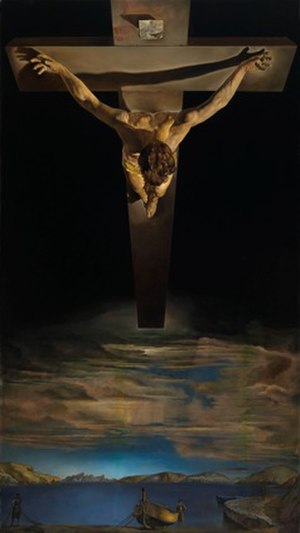
In the meantime, I headed upstairs and asked a docent where a good place to start my first tour of the museum would be. He gave me some advice and within seconds I was staring up at the original canvas painting of Christ of St. John on the Cross (thank you, Wikipedia). I followed the upstairs corridor around to a room full of Scottish artifacts and items belonging to such Scottish heroes as Robert Byrnes (Scotland's native poet and most renown national hero) and Mary Queen of Scots. One o'clock came around and and I picked out a good spot to watch the organ concert which aptly started off with Bach's Toccata and Fugue in D Minor (and it just shook the building!):
I wandered around a little while longer on Saturday at the museum, but soon went home. On Sunday, though, I got back out there and hopped onto one of those cheesy double-decker tour buses to get my official tour of Glasgow. I'd heard great things about the tour and was excited to learn a lot about the city. It was well worth it since you pay for your ticket, which is then valid for two days and you can hop on or off the bus at any of the 15-some stops. The morning was super sunny and warm-ish (6°C), so I dressed for that weather, but was later wishing I at least brought a hat since I sat outside the entire time to get some good photos without the smudges from the windows. Well, it eventually got really cold and I think I contracted either a chest-cold or pneumonia. The bus also went a little too fast for me to really absorb the info the audio tour was providing. An example went something like this (I'm going to paraphrase):
Look left as we pass through the intersection and you will see one of Glasgow's oldest buildings. It's architecture makes it one of a kind and when it was built it was beautiful and really cool.
So I had my camera ready and the bus just flew through the intersection and I have no idea what I was supposed to be looking for! This is all besides the point. The fact is that it's a great way to see the city.
I even hopped off at the Glasgow Green, which is the oldest park in Glasgow and took a little tour through the People's Palace, a city-run museum covering all facets of Glasgow living from the early industrial days, to the tenement housing and city history. The housing bit was interesting because Glasgow's population in the late 19th century grew to huge numbers and the city was quickly overcrowded. The renovation of many neighborhoods and clearing of the old city tenements was one of the first major crackdowns on crime, poor living conditions, and disease control in the world, and was met with anger by thousands of people who believed the real reason the tenements were being shut down was to make room for housing that was out of their budget. Finally, there was a little exhibit on World War II and I learned that Glasgow had been severely damaged by German air raids and parts of the West End of town (my neighborhood) were bombed beyond repair. Attached to the People's Palace is the Winter Gardens, a tropical greenhouse with a nice little café and tons of lush vegetation. The Greens themselves are beautiful and spacious and are used for public events throughout the year from sporting matches to fireworks displays.
I got back on the bus and we passed the oldest house in Glasgow (the oldest building is the Cathedral) and made our way along the River Clyde where we crossed over the Squinty Bridge, Glasgow's newest motorway across the River Clyde, and over to the Science Center which I will have to return to eventually because not only has an IMAX theater, but the tallest structure in Scotland - the Glasgow Tower - is also there. Not only is it the tallest structure in Scotland, but it is also the only free-standing structure in the world able to rotate a full 360°!
Right across from the Science Center is the Clyde Auditorium, a massive building designed to represent the hulls of ships, but is now cleverly nicknamed, The Armadillo. The Armadillo is built on reclaimed land that was once the Queen's Dock, one of over 62 ship-building facilities along the 20-mile stretch of the River Clyde. Adjacent to the Armadillo is the Finnieston Crane which was once used for ship-building, though is now just a landmark to days gone by in the city. But those days are not that far in the past because just downriver were some more cranes that are actively being used in the building of parts for two new aircraft carriers for the Royal Navy, and it is also the dock where the majority of the Navy's destroyers are built. And not too far away from the Science Center, on the other side of the Clyde, is the new city-run Transportation Museum - a fantastic and fun getaway where you can explore all sorts of old trains, subways, trams, cars, and other modes of transportation from all periods of time. Though it's kind of disorganized (massive vehicles everywhere!), I'm looking forward to going back and focusing on one mode of transportation. It definitely reminded me of the Henry Ford Museum at Greenfield Village near Detroit!
By that time, I was cold and really ready to go home. Take a look at some of the photos I took below, but before I finish this post off, there were a few other fun facts I learned on my bus tour:
Glasgow is the third largest city in the UK and in its heyday was the "2nd City of the Empire" next to London.
The Glasgow Underground is the third oldest in the world and was originally pulled by an underground cable, which the driver had to clamp onto in order for the train to gain speed and the release the cable when it was going fast enough.
At its peak, Glasgow was the main entry port for over half the tobacco coming to Europe from America because it took ships 20 fewer days to sail into Glasgow than into London. Tobacco magnates from Glasgow owned most of the land in tobacco growing states like Virginia.
The Glasgow Cathedral is the only church to survive the Reformation and is the oldest building in the city.
Glasgow has been cleaning up its buildings and image since smoke and soot poured down on the city during its industrial peak. Even the insides of buildings were covered in soot. Only after removing the soot and grime did many people realize that the stone buildings were of two main colors: a rose and a gold (see the photo below of Glasgow Uni and the Kelvingrove Museum for a good example!)
Anyway, I hope this fulfills the need for anyone wondering where I'm living to have a brief history of some of the sites of my new city. I'm excited to see more places, visit museums, and get to know it a little better in the next weeks.
I left Glasgow on Saturday morning (the 3rd) and shortly landed at the KLM/Delta European hub, the Schipol Airport near Amsterdam. My flight schedule had me on a 24-hour layover in Amsterdam (my choice) and I fully intended to enjoy some time in the city. Before I left for Glasgow, I booked a bed at a hostel on the outside of the city center, but right next to the museum campus. I was hoping to find something closer to the city center, but many hostels won't let you book a single bed over a weekend for just one night; instead, you have to book a minimum of 2-3 nights. Getting to the hostel wasn't bad, though. Once I got through customs, it was pretty easy for me to find a ticket agent and buy a round-trip train ticket, though the woman behind the counter gave me a look of disdain when I started speaking in English.
The train system was familiar since I spent so much time in Berlin earlier this year, and no more than twenty minutes later, I arrived at the main train station in downtown Amsterdam. It's a beautiful building, architecturally, though much of it was covered in scaffolding and being refurbished. I bought a street map of the city from the Tourist Information center just across the street from Centraal Station. Though it was early in the afternoon, the sky was getting a little cloudy and started to rain a little bit, but it didn't bother me as I started wandering through the streets of Amsterdam.
I didn't take too much time to get lost in the city because I wanted to get to my hostel and check in, making sure I had a bed for that night. A number of trams and buses run throughout the city and there is a subway system set up, though it doesn't really get you many places in the city, but I decided to walk. Afterall, it didn't look far, and I was short on change. I did find out before I went about the I Amsterdam card, which give you total access to any public transportation system as well as access to dozens of museums around the city. I thought about purchasing this card, but even for the 1-day offer, it was going to be more expensive than walking and buying my entrance to the one museum I had time for.
Amsterdam is one of those fantastically cool, walkable, friendly, cheery, beautiful cities. It is of course famous for its extensive series of canals, which were recently added to the UNESCO list of culturally significant sites. One of the other things that immediately stands out as being unique among European cities is the architecture of the houses, the majority of which can't be more than 15-feet wide. Though skinny, each building is deep and rises 4-5 stories above street-level, and is crowned by a little ornamental façade. Naturally, this design made it difficult to move large pieces of furniture up and down stairs, so many of the houses have a pulley system in place near the roof line so that you could hoist large items up and through windows. And of course there are the canals - beautifully lined with trees along the sidewalk and boats in the water. I've never been to Venice, and while I imagine it is more austere, Amsterdam's canals just seemed inviting and quaint.
Tree-lined canal in Amsterdam
I got to my hostel, the Hotel Annemarie, and had a little problem checking in because I thought I paid for everything online at www.hostelworld.com, but it turns out they only take the deposit and you have to pay the rest upon arrival - but the hostel may or may not take credit cards. Such was the case and I had to run around the corner to find an geldautomat (ATM) and get some money. Wasn't too big of a deal, but I also had to put to a refundable deposit for my key, which was just slightly annoying. But the host at the hostel was a very cheery man with a more than friendly disposition and every time I saw him he asked me by name, "Eric, how is your stay? Eric, how are the rooms? Eric, is there anything I can do for you?" And to be fair to the 75% rating on hostelworld.com, Hotel Annemarie was very nice - definitely not a party hostel.
I went up to my bed - one of eight in the room - and took advantage of the free wifi and tried calling home with my computer. But it turns out that voice calling from the Gmail chat window has been modified and it is no longer free to call the US internationally... So I checked my email, made my bed, and then put my things in my backpack and headed out to check out a museum while they were still open. Most close at 6pm on a daily basis, so I didn't have much time. Luckily, Hotel Annemarie is adjacent to the museum campus where the Van Gogh Museum and Rijksmuseum are located.
My first instinct was to go to the Van Gogh Museum and get my fill of the renowned artist, but I ran into another snafu because I didn't have much cash and the minimum to use a card was 25-euro... Luckily, the Rijksmuseum is just down the street and I was easily able to get in. The Rijksmuseum is a clearinghouse for all things Dutch. It covers aspects of Dutch history, culture, and art and has many fascinating displays. The museum has been undergoing a series of renovations so the majority of the museum is inaccessible; instead, they've had to condense their art and artifacts down to the most popular.
I had to go through fairly quickly, but was able to learn that the Netherlands gained its independence from Spain in the 1500s and refers to various autonomous regions within the political confines of what we recognize today. Holland, though synonymous with the Netherlands, is really just one of those autonomous regions. Anyway, the Netherlands quickly became a powerhouse of sea-trading and exploration, colonizing parts of North America (New Amsterdam became New York City), South America (Suriname), Africa (parts of South Africa), and southeast Asia (Indonesia). Somewhere along the way, the Netherlands transitioned into being governed by a monarchy...I missed that transition, though - or maybe that display was in the closed-off portion of the museum?
The tour then brought me through a few rooms complete with jewelery, gems, and other fancy accoutrements of the rich and famous and a room full of delftware, a type of blue and white ceramic in which pictures of Dutch life, designs, flowers, and landscapes are depicted.
But the main attraction at the Rijksmuseum is the vast artwork collection with pieces by Rembrandt, Vermeer, Hals, and Steen. I am not an art historian and don't really understand the intricacies of the various media or techniques used, but I can appreciate the talent that goes into portraying the Dutch landscapes, the symbolism represented in various party scenes, the detail in portraits, and the sheer magnitude of the museum's most famous piece, Rembrandt's "The Night Watch" - a huge 12-by-14 foot mural of guardsmen from Amsterdam's upper-crust. It's a beautifully detailed painting that is somehow still around today after being trimmed down on three sides when it was moved to a secondary location that wasn't as big as its original and then more recently being ripped apart in places after a deranged man slashed through the painting in many places with a knife.
Rembrandt's The Night Watch in the Rijksmuseum (photo: Rijksmuseum.nl)
I left the museum right around closing time at 6pm, and didn't really feel like walking all the way back into town for a night out by myself, so I grabbed some food from a nearby grocery store and went back to my hostel to eat. Back in my room, three girls from Spain were getting ready for their night out on the town, but the other beds were empty. This was good news because it meant that our room was maybe not going to be too crowded. Sure, I might have to deal with them coming back late that night, but I could put up with that. I finished reading my book and checked emails until my battery ran out, but by that time, a giggly and talkative group of French students (and one Swede) came into the room speaking the whole time in French. I tried to just ignore them, but one of the guys and I chatted for a little bit. They were confused why I was staying at a hostel in Amsterdam but wasn't going out for the night. I tried explaining that I was on business (of sorts) and just here during a layover. I don't think they understood. They continued to get ready while I, running out of things to do, pretended to study a map of the city.
They eventually left, apologizing in advance for when they came back later that night, and I tried to get as much sleep as possible because I knew that later on, when everyone returned, I'd be woken up again. Well, the Spanish girls did not return, which I thought was weird, but it was good because there weren't enough beds for me, the three of them, and the five french students, and when the students returned they were loud, but not obnoxiously and I prepared for the light by putting my airplane eye-shades on. Wasn't too bad.
I wanted to wear ear plugs, too, but I wouldn't have heard my alarms go off on my iPhone, which I had tucked into the hood of my jacket hanging off the post of my bunk bed. I ended up waking up before my alarm went off and decided to be nice to my roommates and turned my alarms off before hopping in the shower so they wouldn't be woken up either. I took my shower and started packing my bag in the dark so I wouldn't bother them by turning on a light, and nearly had everything together when I went to put my iPhone in my pocket...but it wasn't there in my jacket's hood where I left it. I felt through all the pockets in my jacket to see if I just misplaced it. But I was positive it had been in my hood because that's where I put it when I turned my alarms off so my roommates wouldn't be woken by it. It just wasn't there. I thought maybe I left it in the pockets in my shorts, so I emptied my backpack and checked everywhere. Couldn't be found. I checked my jacket again, and then shook my sheets, and then my backpack again. Jacket. Backpack. Jacket. Backpack. It was nowhere to be found. I started getting really psyched out that someone, again, had stolen my iPhone, exactly like what happened when I was on my way to the Berlin airport earlier this year.
I started to freak out and I turned on one of the lights, which woke up one of the French girls, so I muttered, "Désolé. J'ai perdu mon mobile." She asked me to let the cat out of the room because it was bothering her. When did a cat come into the room? So I let it out and continued my search. Maybe it fell into the sheets of one of the two beds below? I couldn't quite justify rummaging my hands through the beds where a girl in one and a guy in the other were sleeping, so I flattened myself on the floor and rechecked under the beds. There, with the light on, I could see a little box-like thing near the wall under the bed. It was my phone! I grabbed it just to make sure, let out a big sigh of relief, and stuffed everything back into my backpack and headed downstairs for a meager breakfast of toast and jam.
It wasn't that late and I was going to make my flight, no worries, but I quickly left the hostel and started my way back to Centraal Station. But what good is a stay in Amsterdam without a visit to the Red Light District? The district is famous for its provocative nightlife and adult entertainment, but is also home to museums, art galleries, family houses, churches, cafés, and shops. Of course, being Sunday morning, nothing was open, but it made my visit even cooler because it was like walking through a ghost town...or at least like walking down Bourbon Street in New Orleans the morning after during Mardi Gras!
The famous I amsterdam statue outside the Rijksmuseum. They were filling the fountain in front of it with water for an ice rink, so I couldn't get a head-on shot. Seems like 8am on a Sunday is the only time when it's not covered in tourists!
Old mansions lining the outermost of the concentric canals, separating the main downtown area and the museum district.
The National Monument commemorating WWII
The Oude Kerk, the oldest Gothic monument in Amsterdam, dates back to the 1200s, though it has undergone many enlargements since. It is an island of sanctity in the heart of the Red Light district :)
Typical façades lining the canal in the Red Light District
Amsterdam was such a beautiful city, I am sorry I only had such a little amount of time to spend there, but it is definitely worth going back to with friends or family - someone else to enjoy it with me and experience all it has to offer.